
How to Access Your Subconscious Mind: 5 Proven Methods That Work

The subconscious mind has been a topic of interest since Sigmund Freud. He talked about hidden motives and memories. The Oxford Dictionary of Psychology says it's the part of our mind we're not aware of without trying.
Writers and clinicians have used different terms like preconscious and unconscious. But, practical methods are more helpful. They cut through the confusing terms.
This article will show you how to access your subconscious mind. It uses proven psychology and simple tools like vision maps and dream recall. You'll learn how to use these techniques in your daily life.
The brain likes to keep things the same. It has a natural resistance to change. But, you can overcome this. The guide will teach you how to change your subconscious mind patterns.
All seven methods aim for the same goal: to access the theta state. This is a state of deep relaxation. It helps you change your mind for good.
Key Takeaways
- The subconscious stores memories and motives that are not immediately accessible.
- Practical subconscious mind techniques include dream recall, vision maps, and memory meditation.
- A homeostatic impulse keeps beliefs stable, so change requires intentional practice.
- Theta state access is the neurological doorway used by all seven methods in this guide.
- Commitment to simple, daily routines accelerates the ability to reprogram subconscious mind patterns.
Understanding the Subconscious Mind and Why Theta Matters
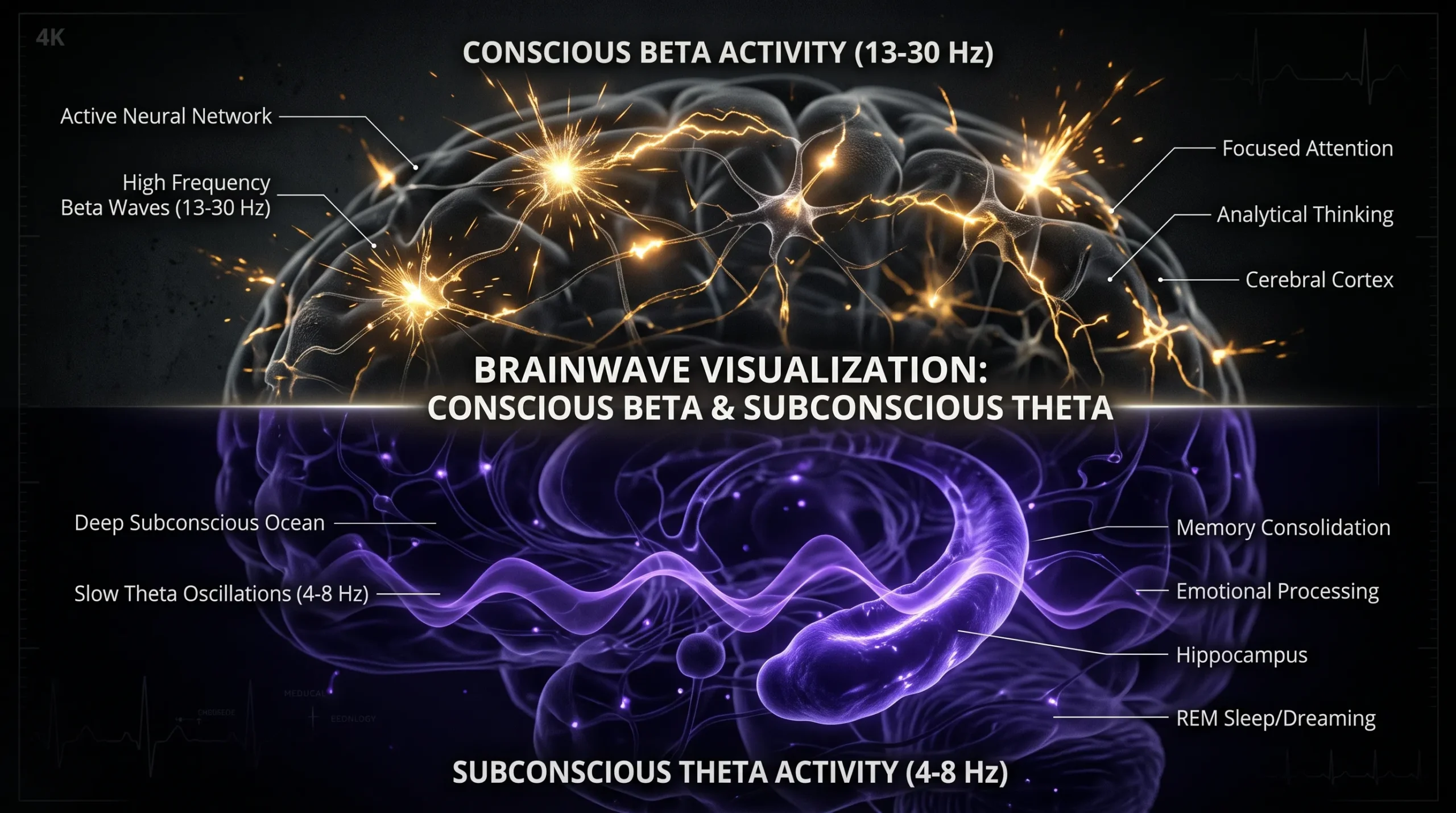
The subconscious mind holds memories, habits, and motives just below our waking awareness. It combines classic psychology and modern neuroscience. This makes techniques for accessing the subconscious mind practical and easy to understand.
Defining the subconscious versus preconscious and unconscious
The subconscious mind includes memories and motives we're not aware of but influence our behavior. The preconscious mind has information we can recall with attention, like a phone number. The unconscious mind deals with deeper, symbolic processes we can't easily access.
Homeostatic impulse and the brain’s role in regulating beliefs and habits
The brain likes patterns that save energy and keep things stable. This impulse leads to confirmation bias and sticking to habits. To change habits, we need to practice new behaviors, be open to new ideas, and reinforce them consistently.
Why theta wave activation is the common neurological denominator
Theta waves, between 4–8 Hz, are found in light sleep and deep relaxation. They are key in accessing the subconscious mind. Theta waves help in memory consolidation and make us more open to suggestions.
How theta states reduce analytical (Beta) dominance and open access
When theta waves increase, Beta waves (12–30 Hz) decrease. This reduces our mind's critical thinking and opens us up to new ideas. Techniques like meditation and hypnosis use this shift to help us change.
| Aspect | Typical State | Why It Matters |
|---|---|---|
| Preconscious | Waking recall with focused attention | Accessible content that can be brought into conscious planning |
| Subconscious | Light sleep, relaxed wakefulness, theta | Stores habits and implicit memories; target for deliberate change |
| Unconscious | Deep symbolic processing, less reachable | Shapes narratives and deep drives; often explored via therapy |
| Theta activation | 4–8 Hz during hypnagogia and meditation | Enhances memory encoding and suggestibility for reprogramming |
| Beta dominance | 12–30 Hz during active thinking | Maintains critical filter that resists new patterns |
🎵 Deepen Your Theta Practice
Understanding the subconscious is the first step. Activating theta states consistently is the second. Discover the science of binaural beats and how a 7-minute daily audio practice can make theta access effortless:
Read: Binaural Beats for Meditation — The Science of Sound-Guided Brain States →
How to access your subconscious mind: A Practical Overview
Starting your journey to inner change is simple. Follow these steps to tap into your subconscious mind. Learn how to practice daily, find the best times for influence, and create lasting habits. These tips will help you learn faster and change your automatic responses.

Deliberate access versus passive dreaming
Deliberate access involves planned exercises to reach specific states of mind. Use techniques like vision maps, memory-based meditation, and journaling to focus on certain beliefs or habits. These methods help encode new information and change habits faster by giving your mind clear cues and repetition.
Passive dreaming happens without trying. Night dreams can show patterns but rarely change habits on their own. By combining intentional practice with dream recall, you can turn brief insights into lasting changes.
Ideal times to access the subconscious: morning hypnagogic window, pre-sleep, and deep meditation
The morning hypnagogic window, just after waking, is perfect for vivid imagery and suggestions. Morning journaling and brief visualization here can improve dream recall and introduce new responses.
Pre-sleep moments are also ideal. Short scripts or quiet affirmations work well here because the mind is more open to change. A five- to ten-minute ritual can be very effective.
Deep meditation sessions create a steady theta rhythm with regular practice. Aim for three to five sessions a week. This consistent practice deepens your access to memory networks and implicit learning.
Setting realistic expectations and permission to change
Change requires repetition. Commit to one or two methods for 90 days to rewire your nervous system. Simple routines like morning journaling and pre-sleep visualization are great for busy people.
Start by being open to the possibility of change. Give yourself permission to accept small victories and build momentum. Tracking your progress helps reinforce your efforts without expecting immediate results.
Start with two practices that work well together. Create a consistent cue and fill idle time with brief affirmations or audio. Log your progress weekly. These steps make it easier to access subconscious meditation states and even influence your subconscious while sleeping.
👁️ The Biological Seat of Intuition
The subconscious communicates through intuition — and the pineal gland is the biological structure most associated with that inner knowing. Discover how decalcifying your third eye can sharpen the very signals your subconscious is sending:
Read: Pineal Gland Activation — The Spiritual Science Behind Your Third Eye →
Theta Meditation for Deep Subconscious Access
Theta meditation is a way to calm the brain. It moves from busy Beta to quieter states. Using breathwork, imagery, and memory tasks, it helps form new connections and access emotions.

What it is and how it shifts brainwaves
Theta meditation lowers brain waves from Beta to Alpha and then theta (4–8 Hz). It uses slow breathing, soft focus, and a counting or gratitude alphabet. This makes the brain more open to suggestions and imagery.
It's a reliable way for beginners to access their subconscious mind.
Step-by-step practical session for beginners
Sit comfortably and soften your gaze or close your eyes. Start with 5–10 minutes of slow, deep breaths.
Make your exhale a bit longer to calm down. Use a simple anchor like counting breaths or repeating a mantra.
After 10–15 minutes, do a 2–3 minute visualization or affirmation. Finish with gentle breathing and journal any thoughts or feelings.
Neurological basis and memory links
Theta rhythms help the brain's memory centers work together. This improves memory and new connections. When theta increases, we become more open to suggestions and emotions.
This makes it easier to encode intentions with visualization. Lower Beta activity quiets the conscious mind, allowing new beliefs to become part of our subconscious.
Best times and environment for practice
Practice in the early morning or before bed for best results. Find a quiet, dimly lit room with a comfortable temperature. Remove distractions.
Short sessions of 10–30 minutes each day lead to lasting changes. Use a reminder, like a journal, to make it a habit and access your subconscious mind more easily.
🧘 Skip the Learning Curve — Enter Theta in 7 Minutes
Theta meditation takes months to master. The Quantum Brainwave Protocol uses precision audio engineering to guide your brain into the same theta state — from your very first session.
Hypnagogic State Techniques at the Edge of Sleep
The hypnagogic window is where wakefulness meets sleep. It's filled with vivid images and sudden insights. This state helps us tap into our subconscious mind while we sleep.

Understanding the transition
He notices thoughts thinning and images appearing easily. This makes it simpler to see things without filters. It's a great way to access your subconscious mind without much effort.
Practical protocols
Try the wake-back-to-bed method to enhance hypnagogic vividness. Wake up after four to six hours, stay awake for twenty to sixty minutes, then go back to bed. This method boosts your chances of getting useful insights.
Set a simple intention before sleep or during the wakeful period. For example, say “I will remember and use any insights I receive.” This helps link your waking goals to your hypnagogic impressions.
Keep a dream journal nearby. Write down any images, emotions, or fragments as soon as you wake up. Even a single word or “blank” if you don't remember anything. Regular journaling improves dream recall and uncovers recurring symbols.
Capturing and using hypnagogic imagery
Record any patterns or emotions you notice. He sees these as clues, not fixed meanings. Turn these images into short affirmations or visualizations that match the emotion.
Practice these affirmations or visual scenes in later theta sessions or the next hypnagogic window. This process turns raw images into beliefs that can change your life. Over time, your subconscious mind starts to accept these new patterns as normal.
Routine and patience
Keep sessions short and consistent. Small, repeated efforts are more effective than long, sporadic ones. With regular practice, hypnagogic techniques become a powerful tool for personal growth and accessing your subconscious mind every day.
Access the Hypnagogic Gateway Daily
You Don’t Have to Wait for Sleep to Enter Theta
The Quantum Brainwave Protocol recreates the hypnagogic theta state on demand — any time of day, in just 7 minutes. No sleep schedule required.
Guided Hypnosis and Self-Hypnosis Methods
Guided hypnosis and self-hypnosis are great ways to reach a deep state of relaxation. They help us access our subconscious mind and make us more open to suggestions. By using these methods, we can change old patterns that hold us back.
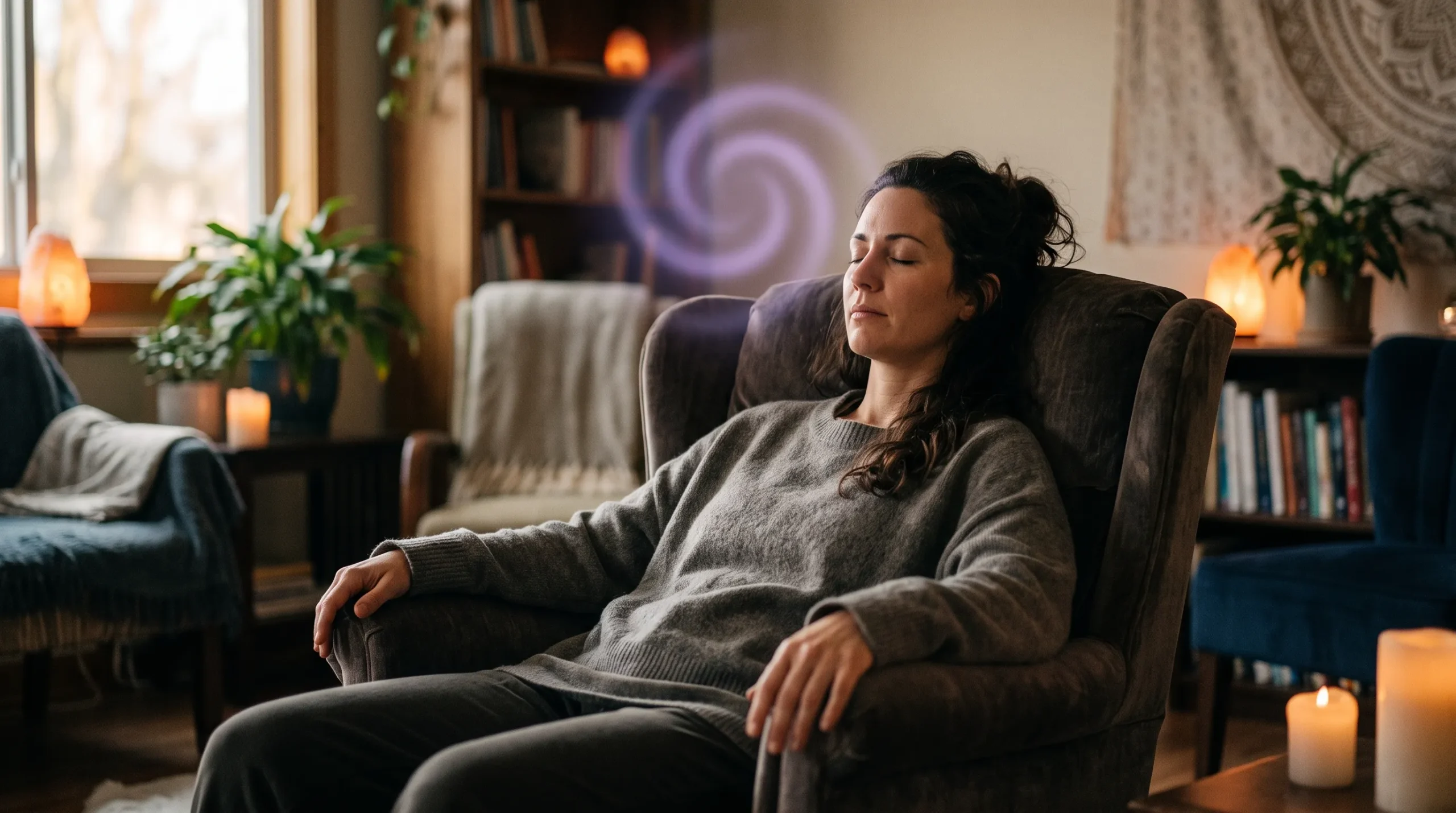
When a trained hypnotherapist guides you, it can really help. They use special techniques to lower your stress and make you more open to new ideas. This way, positive suggestions can take root in your mind.
How formal practice works
- Induction: slow breathing and progressive relaxation guide the client toward alpha then theta.
- Deepening: imagery like a descending staircase or gentle floatation amplifies theta entrainment.
- Suggestion: short, present-tense phrases or rich visual scenes embed new beliefs.
- Reorientation: a calm count-up or sensory cue restores alertness with the new pattern intact.
Self-hypnosis is a simple way to practice change every day. Just 10–20 minutes a day can help you stick to new habits. It's easy to learn and can be done anywhere.
Basic self-hypnosis script structure
- Prepare: quiet space, comfortable posture, set a clear goal for the session.
- Induction: progressive muscle relaxation or a countdown to lower beta waves.
- Deepening: guided imagery to deepen the relaxed state and invite theta activity.
- Suggestion phase: present-tense, positive statements and sensory-rich scenes to reprogram subconscious mind.
- Reorientation: gentle return with a count or affirmations to anchor the change.
- Reinforcement: journal sensations immediately or use a physical cue to lock in the shift.
Practical rehearsal tips
- Practice at consistent times: morning pre-sleep or a planned meditation slot works well.
- Keep suggestions short and specific to make them easier to absorb.
- Use emotional language and sensory detail to increase the suggestion’s impact.
- Record a trusted guided track or write your script and rehearse until it feels natural.
When professional help is recommended
If you're dealing with trauma, deep phobias, or long-standing habits, see a licensed hypnotherapist. They will work with you to set goals and create a plan. They'll check on your progress and adjust the approach as needed.
| Method | Session Length | Primary Benefit | Best Use |
|---|---|---|---|
| Guided clinical hypnosis | 30–90 minutes | Maximizes suggestibility; tailored therapeutic reframing | Complex habits, trauma-related blocks, therapy integration |
| Recorded guided hypnosis | 10–30 minutes | Convenient theta induction; consistent daily reinforcement | Habit change, stress reduction, complement to therapy |
| Self-hypnosis | 10–20 minutes | Empowers daily practice; builds self-efficacy | Daily rehearsal to reprogram subconscious mind and maintain gains |
| Short micro-suggestions | 1–5 minutes | Quick anchors for behavior; portable reinforcement | Momentary urges, on-the-spot cueing, habit interrupts |
Journaling Immediately After Waking and Dream Recall

Morning pages capture fragile imagery before it slips away. The minutes after waking often hold hypnagogic impressions and theta-like neural patterns. Writing at once leverages that receptive window and trains memory to preserve dream material.
Why immediate journaling leverages the hypnagogic-to-theta window
He stays still for a few breaths and lets images surface. That pause taps theta-friendly brain states and deepens access. Regular practice strengthens neural pathways that link waking intention with nocturnal content.
Dream recall techniques and how dreams reveal subconscious content
She sets a strong intention to remember before sleep and places a journal and pen within reach. Upon waking, resisting sudden motion helps fragments and feelings emerge. Recording simple details, emotions, and odd symbols exposes repeated patterns the subconscious uses to communicate.
Practical morning routine to capture and use insights for reprogramming
They wake to a gentle alarm and remain supine for 30–60 seconds, allowing imagery to arrive. Next, free-write for five to fifteen minutes without editing. Highlight recurring symbols and emotional themes. Translate key lines into short, present-tense affirmations or micro-behavior steps to use later in theta meditation or self-hypnosis practice.
Below is a compact routine table that outlines actions, timing, and purpose for easy use.
| Action | Timing | Purpose |
|---|---|---|
| Set intention & place journal | Evening, before sleep | Prime memory and reduce friction on waking |
| Gentle alarm | Morning | Minimize abrupt arousal to preserve hypnagogic imagery |
| Remain still and breathe | 30–60 seconds after waking | Allow theta-like impressions to surface |
| Free-write in journal | 5–15 minutes | Capture fragments, emotions, and symbols for analysis |
| Highlight themes and create prompts | After writing | Turn material into reprogramming actions and affirmations |
| Use in theta meditation or self-hypnosis | Later same day or evening | Reinforce insights and accelerate subconscious change |
Consistent journaling for subconscious work paired with deliberate dream recall techniques becomes a training method. It teaches the mind how to access and report inner imagery, making the process of how to access your subconscious mind practical and repeatable.
Binaural Beats, Brainwave Entrainment, and Technology Shortcuts

Technology can help us get into a receptive state faster. Binaural beats and brainwave entrainment use different tones for each ear. This makes the brain focus on a specific frequency, like theta.
This shift helps lower Beta activity and boosts alpha/theta power. It makes it easier to enter the theta state during meditation, before sleep, or in the morning.
It's important to use technology wisely. Choose trusted sources and tracks that are made for theta entrainment. They should have smooth transitions and clear volume levels. Listening for 10–30 minutes is usually best.
Don't listen while driving or operating heavy machinery. If you have epilepsy or certain brain conditions, talk to a doctor first.
Using tracks with a purpose can make them more effective. Try binaural beats subconscious tracks with guided meditation, self-hypnosis, or setting intentions before sleep. Keep a regular listening schedule and journal your experiences to reinforce what you've learned.
How to choose safe theta-frequency tracks:
- Look for programs with gradual frequency changes and clear instructions.
- Use high-quality stereo headphones for the best entrainment.
- Start with shorter sessions and watch for comfort and clarity.
- Choose content from well-known providers with good reviews.
Quantum Brainwave Protocol is a technology that claims to quickly access theta. It's meant for deep subconscious work. Try it during the hypnagogic window, before sleep, or during focused meditation. Combine it with journaling, visualization, and setting intentions to enhance results.
The Genius Wave is another tool to help you progress faster. It works well with meditations, hypnotic scripts, and morning journaling. Use it to boost theta state access. Pair it with consistent behavior to overcome resistance and solidify new habits.
Technology can speed up access, but it's the consistent effort that matters most. Repetition, clear goals, and making changes in your behavior can make theta experiences last. Those who learn to access their subconscious mind with dedication will see lasting changes.
Choose Your Theta Gateway
Two Science-Informed Protocols. One Powerful Goal.
Conclusion
Getting to your subconscious mind needs a special state of mind. This state is called theta-dominant. You can get there through theta meditation, hypnagogic practice, guided hypnosis, and morning journaling.
These methods help you move away from Beta-driven thinking. This opens doors to lasting changes. By using these states regularly, you can change your subconscious mind patterns.
To start, focus on the morning hypnagogic window, before sleep, or deep meditation. Choose one or two techniques to use every day. Keep track of your progress for about 90 days.
Quiet your analytical mind with breath work and set protocols. Lower stress to reduce Beta dominance. Use reminders or a vision space to help.
Try different methods and mix old practices with new tech shortcuts. Keep practicing and be open to change. This is how you can transform your life. Start with meditation and other techniques, and celebrate small victories to keep going.
Complete Subconscious Activation Stack
Choose Your Theta Gateway
🧠 Complete Subconscious Mind & Psychology Research:
🔑
Practical Methods:
How to Access Your Subconscious Mind — 5 Proven Methods
✨
Hidden Signals:
Signs Your Subconscious Is Trying to Tell You Something
⚡
Protocol Review:
Quantum Brainwave Protocol Review — Does It Really Rewire Your Brain?
FAQ
What is meant by “subconscious” and how does it differ from the preconscious or unconscious?
The term "subconscious" refers to memories and motives we're not aware of without effort. The preconscious holds material we can access with some effort. The unconscious is deeper and harder to reach. We focus on the subconscious because it's more accessible and automatic.
Why do theta brainwaves matter for accessing the subconscious?
Theta waves happen during light sleep and deep relaxation. They help with memory and emotional openness. When we're in theta, our brain is more open to new ideas and feelings.
What is the brain’s "homeostatic impulse" and how does it resist change?
The homeostatic impulse is the brain's need to stay the same. It likes familiar thoughts and habits. To change, we need to practice new things and get support from our environment.
How is deliberate access to the subconscious different from ordinary dreaming?
Normal dreaming is passive. Deliberate access uses special techniques to enter a receptive state. This way, we can shape our dreams and make new habits.
When are the best times to practice for reliable access to the subconscious?
The best times are right after waking, before sleep, and during deep meditation. These times are when our brain is most open to new ideas. Short sessions each day are most effective.
What are seven proven methods to access and reprogram the subconscious?
Seven methods include theta meditation, hypnagogic techniques, and guided hypnosis. Also, journaling, visualization, binaural beats, and repetition. Each method helps lower Beta interference and encode new beliefs.
What is a simple beginner’s theta meditation session?
Sit comfortably and close your eyes. Start with slow breathing and an anchor to relax. After 8–12 minutes, do a short visualization or affirmation. Finish with gentle breathing and journal any thoughts or feelings.
How can someone use the hypnagogic window effectively?
Use simple protocols like setting an intention before sleep. Keep a dream journal by your bed. Record any images or feelings when you wake up. This trains recall and helps with visualizations and affirmations.
What is self-hypnosis and how should a basic script be structured?
Self-hypnosis guides you through relaxation, deepening, suggestions, and waking up. Start with a quiet session, induce relaxation, deepen with imagery, present suggestions, and close with counting. Journal and anchor the experience afterward.
When should someone seek a professional hypnotherapist?
See a hypnotherapist for trauma, complex phobias, or long-standing addictions. They start with an intake, goal-setting, tailored scripts, and outcome evaluation. This ensures safety and effectiveness.
How does dream journaling strengthen subconscious access?
Morning journaling captures hypnagogic imagery and dream fragments. Repeated journaling trains the brain to preserve dream content. It reveals recurring symbols and emotional themes for targeted affirmations and visualizations.
What are practical dream recall techniques?
Keep a dedicated dream journal and pen by your bed. Set an intention to remember before sleep. Wake gently, remain still, and recall images. Write freely for 5–15 minutes, noting emotions and symbols. Translate key elements into short reprogramming actions.
How do binaural beats and brainwave entrainment help access theta?
Binaural beats use different frequencies in each ear to entrain brainwaves toward theta. This reduces Beta dominance, increases theta power, and enhances relaxation and suggestibility. Use for 10–30 minutes during meditation or pre-sleep practice.
How to choose safe and effective entrainment tracks?
Choose reputable providers and tracks designed for theta-range entrainment. Use headphones, avoid operating machinery, and consult a physician if you have epilepsy or neurological conditions. Pair tracks with guided meditation, journaling, or intention-setting for best results.
What are the Quantum Brainwave Protocol and The Genius Wave?
The Quantum Brainwave Protocol is a focused entrainment program for theta activation. The Genius Wave is a complementary accelerator for meditation, hypnosis, and journaling. Both are most effective with consistent intention and follow-through. (CTA: Pretty Link)
Are technological shortcuts enough on their own to create lasting change?
Technology can help access theta, but lasting change requires integration. Clear intentions, repetition, environmental reinforcement, and behavioral practice are key. The brain's homeostatic impulse will resist unless new experiences and consistent reinforcement replace old patterns over time—typically with a 90‑day commitment to notice measurable shifts.
What are common barriers to accessing the subconscious and how can they be overcome?
Common barriers include Beta interference, high stress, and inconsistency. Use breathwork to quiet Beta, schedule short daily sessions, reduce stress, and add environmental reminders. Start with small, repeatable practices—morning journaling plus a brief pre‑sleep visualization is a practical pairing.
How long does it typically take to reprogram subconscious patterns?
Change unfolds gradually. Small, consistent practices sustained for about 90 days create enough repeated activation and reinforcement to shift automatic responses for many people. Expect incremental wins early on; deeper, more entrenched patterns will require longer, possibly supported work with a professional.
Can anyone safely use these methods, and who should take extra precautions?
Most healthy adults can safely practice meditation, hypnagogic techniques, and entrainment when used responsibly. Those with epilepsy, certain psychiatric or neurological conditions, or unstable trauma symptoms should consult a licensed clinician before using strong entrainment or deep hypnotic techniques. Seek professional guidance when symptoms worsen or progress stalls.
What practical first steps should someone take to begin reprogramming their subconscious?
Pick one or two complementary techniques that fit daily life—example: morning dream journaling plus a 10–15 minute pre‑sleep theta meditation with binaural support. Create a vision space and environmental reminders, set short present‑tense intentions each night, track sessions and results for 90 days, and replace passive inputs with positive reinforcement and small behavioral experiments to reinforce new beliefs.
Final Verdict
Your Subconscious Is Already Listening — Start Speaking Its Language
Every method in this guide works because it shares one neurological foundation — theta brainwave activation. Whether you choose meditation, hypnagogic techniques or precision audio technology, the destination is the same. The only variable is how quickly you want to get there.
Leave a Reply