
Pineal Gland Activation: Unlock Your Third Eye Awakening

The pineal gland is a special spot where science meets mysticism. Many believe it's the key to better intuition, vivid dreams, and inner sight. They suggest using meditation, breathwork, and certain herbs like organic haritaki to awaken the third eye.
Science shows that this gland controls sleep by making melatonin from tryptophan. It also affects mood through serotonin. Meanwhile, ancient traditions from India and Egypt see it as the Ajna or the Eye of Horus. They view it as a gateway to inner sight.
This article connects the scientific facts with the ancient wisdom. It talks about how to safely awaken the third eye. It also introduces a special nutritional plan, including a Pineal XT review, to support your journey.
Key Takeaways
- Pineal gland activation links practical biology with age-old spiritual practices.
- Third eye awakening combines meditation, breathwork, and lifestyle changes.
- Pineal gland spirituality appears across cultures, from Ajna to the Eye of Horus.
- Maintaining sleep, light exposure, and diet supports pineal health.
- The article will review targeted approaches, including Pineal XT, for safe support.
What is the pineal gland and why it’s called the third eye

The pineal gland sits at the geometric center of the brain, revered across traditions as the seat of spiritual sight.
The pineal gland is a small organ in the brain. It helps control our sleep-wake cycles by responding to light. Many wonder about its role and why it's called the third eye. This section will explain its biology and the cultural significance behind its name.
Anatomical location and basic biology
The pineal gland is located behind the pituitary gland, near the brainstem. It converts tryptophan into melatonin, which affects our mood and sleep. Light signals reach it through the eyes, influencing our circadian rhythms.
Historical and spiritual names: Eye of Horus, Ajna, Divine Cave
Many cultures have named the pineal gland symbolically. The Egyptians called it the "Eye of Horus," linking it to inner sight. In Hinduism, it's the Ajna chakra, a center for intuition. Yogic texts refer to it as the Divine Cave, a place for meditation and insight.
René Descartes and the idea of the pineal gland as the seat of the soul
In the 17th century, René Descartes believed the pineal gland was the "seat of the soul." This idea linked the gland's function to deeper questions about the mind-body connection. His theory still influences discussions about the pineal gland's spiritual significance today.
🧠 Your Subconscious Is Already Speaking
As your third eye awakens, the subconscious mind becomes more vocal — through dreams, gut feelings, synchronicities and verbal slips. Learn to recognize and decode these signals before they become impossible to ignore:
Read: What Is a Freudian Slip? Unconscious Mind and Hidden Brain Power →
Ancient traditions linking the third eye to spiritual sight
Across cultures, the idea of inner vision is deeply rooted. It combines symbols, subtle anatomy, and ethical training. Ancient schools saw deeper sight as a physical and moral center. They believed it opens with disciplined practice.

From Egypt to India to Tibet, the third eye has been humanity's oldest map of inner vision
Egyptian symbolism and the Eye of Horus
Egyptian art gave visual form to inner perception with the Eye of Horus. Priests and sages saw it as a symbol of protection, balance, and refined spirit. They used rituals like chant, incense, and contemplation to foster true sight.
Hindu concepts: Ajna chakra, alta major, and yogic practices
Classical yoga texts place concentrated perception at the Ajna chakra, known as the Divine Cave. Practices like Ajna-focused meditation and Unmani mudra are key. They appear in Hatha and Tantric lineages to stimulate inner clarity.
Yoga manuals talk about the alta major and subtle centers. They link the pituitary and carotid regions to higher vision. Teachers stress steady ethical discipline and breath control for gradual inner awareness.
Buddhist teachings on inner vision and awakening
Buddhist traditions see inner sight as a part of awakening. It grows with insight practice. Meditation on breath, luminous awareness, and compassionate conduct refines perception. This leads to intuitive sensitivity arising naturally.
| Tradition | Core Symbol or Center | Traditional Methods |
|---|---|---|
| Ancient Egypt | Eye of Horus | Ritual chant, temple contemplation, symbolic amulets |
| Hindu Yoga | Ajna chakra / alta major | Ajna meditation, Unmani mudra, pranayama, inversions |
| Buddhism | Inner luminous awareness | Insight meditation, ethical training, mindfulness of mind |
🎵 Accelerate Your Pineal Activation With Sound
Nutritional support decalcifies the pineal gland — but pairing it with targeted theta brainwave audio takes the activation to a completely different level. Discover the 7-minute protocol thousands are using to reach deep theta states effortlessly:
Read: The Genius Wave Review — Theta Brainwave Activation in 7 Minutes →
How modern science views the pineal gland
The pineal gland is a place where science meets poetry. Scientists say it has a clear role in our body. But some writers think it might also be linked to our consciousness. This section looks at both sides so you can decide for yourself.
Melatonin synthesis and daily timing
The pineal gland makes melatonin from tryptophan. This process helps us sleep at night. It's linked to many important body functions like metabolism and thinking.
Things like age and lifestyle can change how much melatonin we make. Doctors use this to study sleep problems and jet lag. They also give advice on how to support the pineal gland through diet and sleep.
Light input, retinal pathways, and the brain clock
When light hits our retina, it sends a signal to the SCN in the brain. The SCN controls the pineal gland's melatonin production. This is why light affects our sleep patterns.
Therapies like bright light therapy can help reset our body's clock. This shows how important light is for our sleep. It helps us stay in sync with day and night.
Speculation about endogenous DMT and altered states
Some people think the pineal gland might make DMT, a substance found in plants. The idea is interesting because the pineal gland is involved in our brain's deep workings. It's linked to how we perceive things.
But, there's not much proof that humans make DMT in their pineal gland. Animal studies suggest it's possible, but human research is limited. We need to be careful not to jump to conclusions.
| Aspect | Established Science | Speculative Ideas |
|---|---|---|
| Primary function | Melatonin production tied to sleep timing | Source of endogenous hallucinogens affecting consciousness |
| Key pathway | Retina → SCN → Pineal controls circadian rhythm | Possible local synthesis of trace tryptamines |
| Clinical applications | Melatonin therapeutics for insomnia, jet lag | Experimental interest for understanding mystical experiences |
| Evidence strength | Robust biochemical and neuroanatomical data | Biochemical plausibility, anecdote, limited human proof |
How lifestyle factors contribute to pineal gland calcification
The modern way of life quietly affects the pineal gland. Our daily habits, what we eat, how much light we get, and chemicals in our environment all play a role. These factors are important for anyone interested in opening their third eye and keeping their sleep-wake cycle healthy.
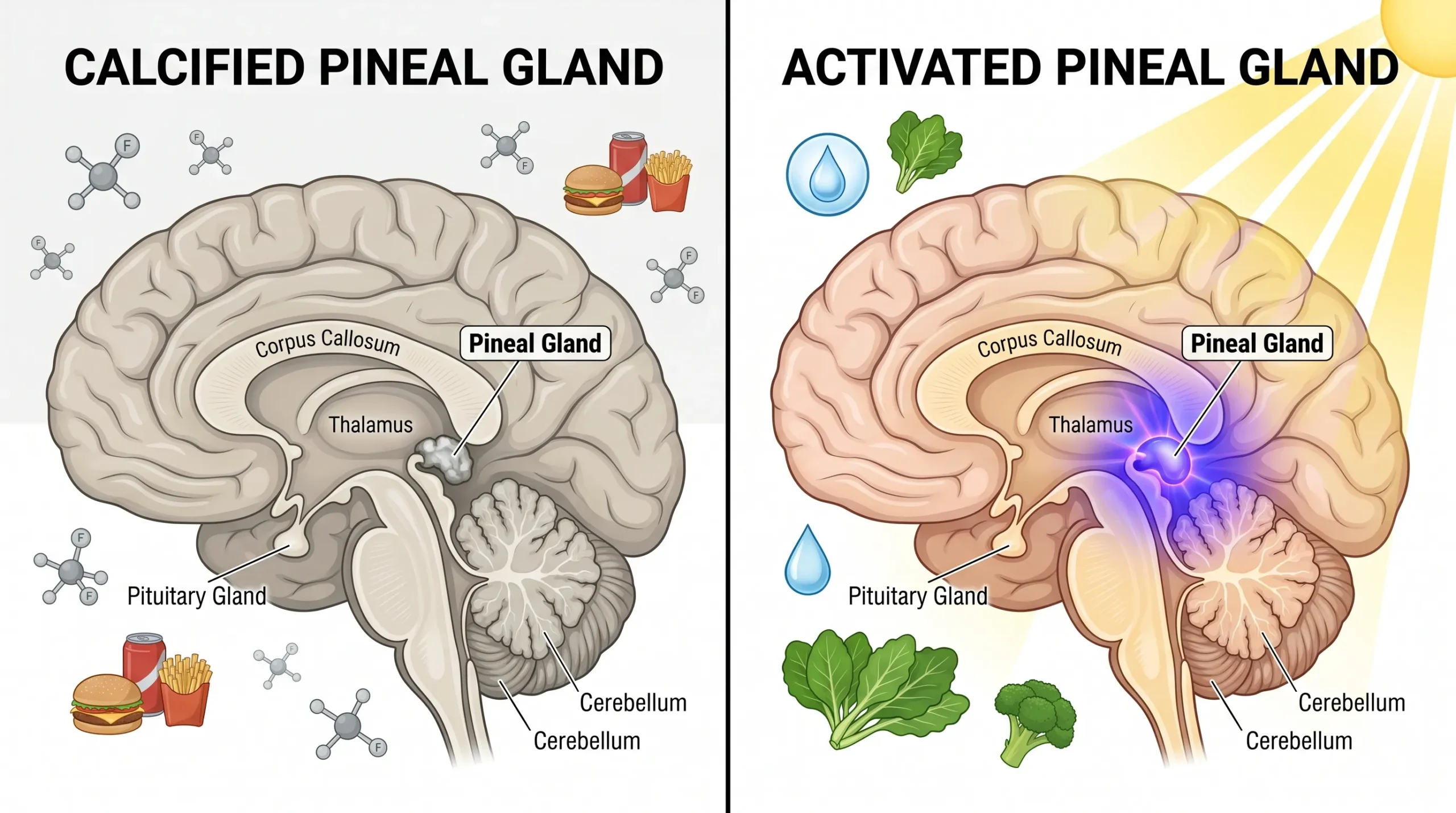
Modern lifestyle choices silently calcify the pineal gland — blocking the gateway to spiritual clarity
Fluoride exposure and the pineal gland
Research suggests fluoride can build up in the pineal gland. This gland, being small and mineral-rich, can hold onto fluoride. The worry is that fluoride from water, toothpaste, and supplements might lead to mineral buildup over time.
Those looking to open their third eye often try to limit fluoride intake. Simple steps include drinking filtered water and checking toothpaste ingredients. These actions help reduce lifelong fluoride exposure.
Processed foods, diet, and mineral imbalances
Our diet affects mineral balance and inflammation levels. Eating too much processed food can lead to an imbalance of minerals. Lack of magnesium, vitamin K2, and iodine can make things worse.
Experts recommend eating whole foods, leafy greens, nuts, and seafood for better mineral balance. These foods help keep the body's chemistry right, supporting melatonin production and inner states related to opening the third eye.
Effects of artificial light and disrupted sleep on pineal function
Artificial blue light at night can lower melatonin levels. The pineal gland needs darkness to produce melatonin. Constant disruption of this cycle can weaken the gland's function.
Good sleep habits are key to melatonin balance and third eye clarity. Simple steps include dimming screens at night, using warm light bulbs, and sticking to a regular sleep schedule.
Concerns about EMFs and chronic exposure
The debate on electromagnetic field effects is ongoing. Some believe long-term exposure can harm pineal function. However, more research is needed to confirm this.
Those concerned about pineal health often limit device use at night and keep phones away from bedrooms. Using wired connections instead of Wi-Fi is another step to reduce disruption and promote a calm environment for rest.
By making healthier lifestyle choices, we can support the pineal gland's health. This is crucial for overall well-being and for those exploring the third eye.
Signs and sensations of a waking third eye
Awakening is a subtle shift in how we see the world. People often feel clearer inside, sleep differently, and notice new sensations. These signs help tell if it's just excitement or a real change.

When the third eye begins to open, the signs are unmistakable — if you know what to look for
Intuitive shifts and sync
They notice more synchronicities and a stronger inner voice. Daily choices seem guided by quiet insights. These signs start as gentle nudges and grow into strong instincts.
Psychic-style perceptions
They experience clairvoyant flashes, sudden images, and telepathic moments. They hear names or phrases and feel physical sensations tied to others. These are signs of a third eye awakening.
Dreams, sleep changes, and energy
Vivid dreams become common. These dreams offer guidance or replay waking concerns. Some need less sleep, while others have fragmented rest and altered melatonin patterns.
These changes can be thrilling and scary. Teresa Keast and yogic teachers advise slow integration and ethical use. They say dramatic sensations need grounding and community support to avoid harm.
Below is a compact chart contrasting practical indicators, typical timing, and suggested responses for someone tracking how to open your third eye.
| Indicator | When it appears | What it feels like | Suggested response |
|---|---|---|---|
| Increased synchronicity | Early to mid stages | Meaningful coincidences; inner confirmations | Keep a journal and note patterns |
| Clairvoyant images | Developing sensitivity | Sudden visual impressions; symbolic scenes | Validate through reflection; avoid rash action |
| Clairaudience or inner voice | Variable, often gradual | Brief phrases or tones that feel informative | Test against ethics and personal values |
| Clairsentience | With stronger empathy | Physical sensations linked to others' states | Practice energetic boundaries and grounding |
| Vivid dreams and altered sleep | Often alongside practice | Lucid dreams; less need for deep sleep | Adjust sleep hygiene and track melatonin-friendly habits |
Are You Experiencing These Signs?
Your Third Eye May Already Be Awakening
Discover the targeted nutritional protocol thousands are using to accelerate and stabilize their pineal gland activation — naturally and safely.
Scientific evidence and speculative connections to DMT
Researchers and spiritual writers often talk about a link between brain chemistry and mystical experiences. The idea that the pineal gland might make DMT has caught a lot of attention. This section explains the basics, the experiments, and the limits of what we know. It also warns us to be careful in how we interpret this information.
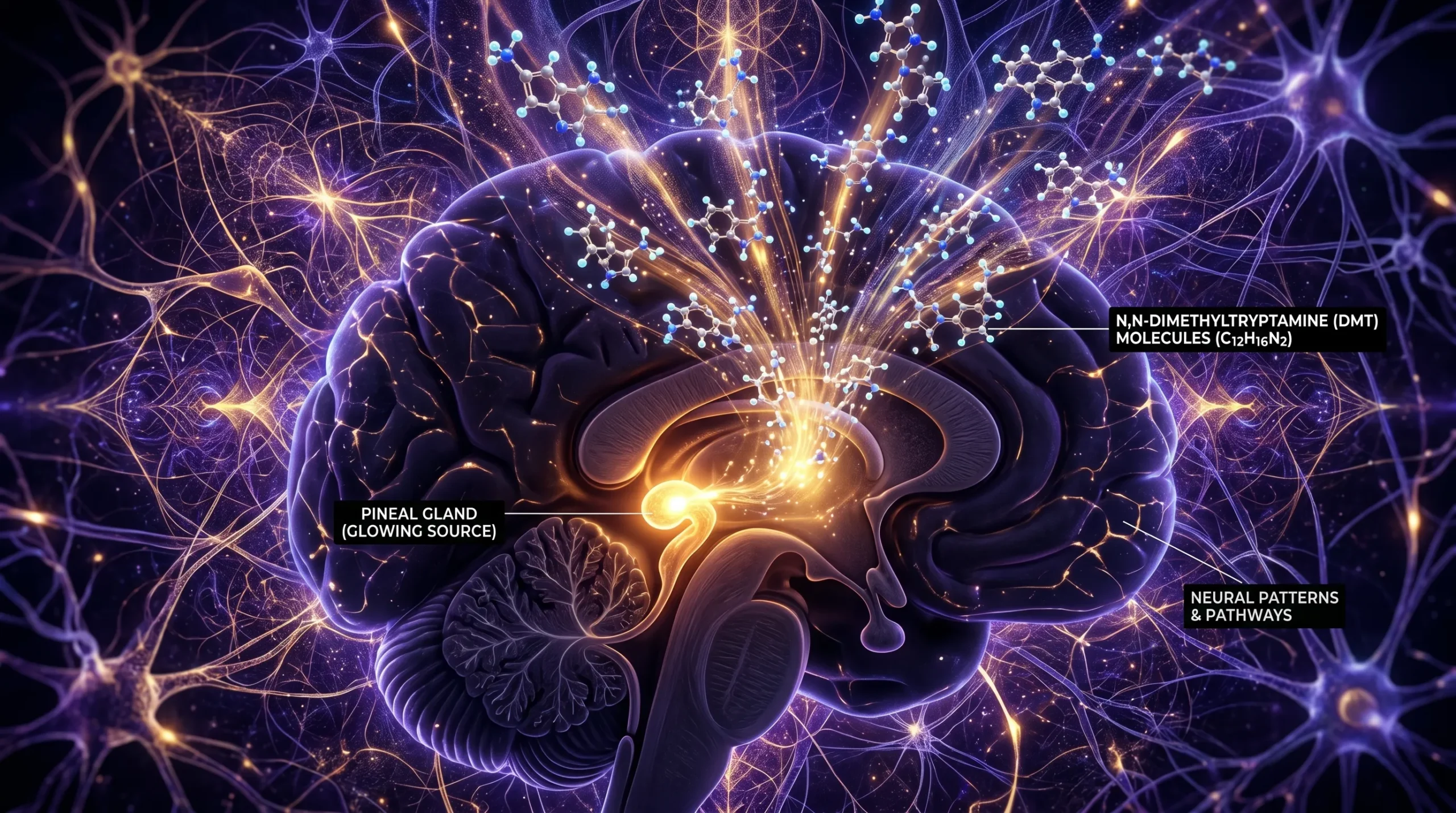
The link between the pineal gland and endogenous DMT production remains one of the most fascinating frontiers of consciousness research
Overview of DMT and why researchers consider the pineal gland
DMT is a strong psychedelic found in plants and in small amounts in animals. Scientists think the pineal gland might make DMT because it has the right enzymes. The pineal gland's role as a spiritual "third eye" makes this idea interesting.
What animal and human studies show and what remains hypothetical
Studies on rodents have found enzymes that could make DMT in the brain. Some animal studies have found tiny amounts of DMT in brain tissue. But, human studies are very limited and indirect.
No clear, repeated studies have shown that people's pineal glands make a lot of DMT. Clinical and postmortem analyses suggest hints, but not proof.
Careful interpretation: separating science from spiritual inference
It's important not to mix up possible biochemical processes with proven facts. Many publications and spiritual books use the DMT idea to explain deep experiences. Some supplement brands market products based on this idea.
Teresa Keast and others warn against using drugs to seek spiritual awakening. They say it can harm mental health and should be done ethically.
The truth is, DMT exists and the brain can make tryptamines. But, the idea that the pineal gland is a main source of DMT and the key to spiritual experiences is still just a theory.
Pineal gland activation
Pineal gland activation combines science and spirituality. It offers health tips and inner practices. These help balance melatonin, blood flow, and awareness.

True pineal gland activation is both a biological process and a profound spiritual unfolding — one that requires preparation, patience and integration
Defining activation in both biological and spiritual terms
Biologically, it means better sleep and hormone balance. This leads to clearer thinking and feelings.
Spiritually, it's about tapping into intuition and inner sight. People often use meditation and ethics to achieve this.
Stages and cautions: ethical and psychological considerations
Activation happens in stages. First, focus on detox, regular sleep, and light control. Later, you might see changes in dreams and synchronicities.
Experts like Teresa Keast advise to go slow. Avoid quick fixes with substances. Stay grounded with support, mentors, and a clear purpose.
Integration and the role of personality development in stable awakening
Stable awakening depends on personal growth. Emotional maturity and service help integrate new experiences.
Working on empathy and boundaries is key. This way, inner changes lead to wise actions, not confusion.
Meditation practices to stimulate the third eye
Starting small and being consistent is key to unlocking inner sight. It's important to focus on ethical growth and staying grounded as you explore subtle states.
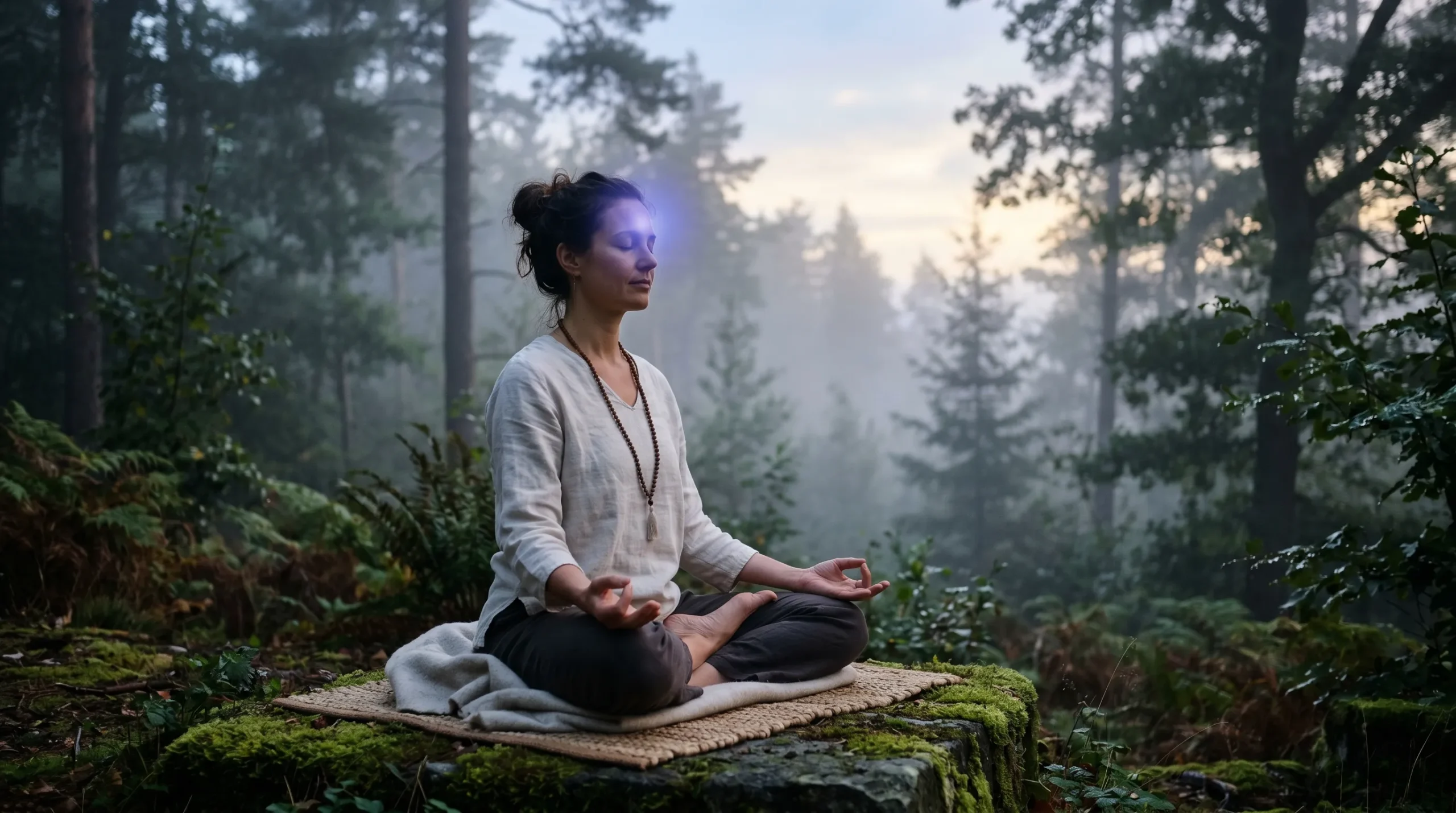
Focused meditation is the oldest and most powerful tool for awakening the third eye
Third eye focused meditation and Unmani mudra
Begin by sitting comfortably with a soft gaze and relaxed jaw. Focus your attention gently on the spot between your eyebrows while breathing naturally. This practice trains your mind to stay focused and calm.
To enhance your practice, use Unmani mudra. This hand gesture helps quiet your mind and focus inward. Start with short sessions of five to ten minutes and gradually increase the time as you become more comfortable.
Breathwork and pranayama techniques that support pineal activation
Balanced breathing is essential for a calm nervous system and subtle perception. Techniques like Nadi Shodhana and Ujjayi calm the mind and improve pranic flow. Regular breathwork prepares the body for pineal gland activation.
Start with three to five minutes of slow alternate nostril breathing. Then, return to natural breathing. If you feel dizzy or experience strong emotions, stop and ground yourself. Use guided practices from trusted teachers to stay safe.
Visualization and the role of sustained inner attention
Visualization helps focus the third eye by giving the mind a steady object. Imagine a dim indigo light or a single star at the brow point while keeping your body relaxed. The goal is gentle persistence, not force.
Combine visual focus with Unmani mudra and pranayama. Short, repeated sessions and mindful integration into daily life prevent overstimulation. Ethical reflection and support from community or teachers ensure steady, grounded development of inner vision.
🧘 Amplify Your Meditation Results
Meditation opens the door — but a decalcified pineal gland determines how far you can walk through it. Support your practice with the nutrients your third eye actually needs.
Yoga and physical practices that support pineal health
Physical practice can shape subtle experience. Gentle routines, breath-linked movement, and mindful posture create an environment that supports the pineal gland's function and the wider nervous system.

Inversions and specific yoga postures increase cranial blood flow, directly supporting pineal gland vitality and third eye activation
Inversions and controlled positions boost cranial circulation. Practitioners often work toward Sirsasana or supported Sarvangasana to bring fresh blood to the head. These postures are part of progressive training, not sudden leaps.
Bandhas and hand seals refine internal focus. Mula bandha, uddiyana bandha, and the chin lock combine with specific mudras to guide attention toward the upper brain centers. This subtle alignment supports breath-led awareness and prepares the system for deeper practice.
Daily movement and posture matter as much as formal practice. Simple spinal mobility, shoulder openness, and regular breaks from forward-leaning work reduce tension along the neck and carotid pathways. Better posture encourages clear circulation and steady breathing.
Energetic hygiene keeps progress stable. Moderation in class intensity, consistent sleep, and balanced stimulation protect against overstimulation. A calm routine promotes integration of shifts that may arise from inversions pineal activation or breathwork.
A practical plan fits most lives: three to five minutes of supported inversion work, daily bandha practice for two to five minutes, and posture checks every hour. These steps can aid long-term goals like pineal gland decalcification when paired with sleep, nutrition, and low-toxin living.
| Practice | Purpose | How to start safely |
|---|---|---|
| Sirsasana (headstand) – supported variation | Increase cranial blood flow; focus the mind | Use wall support, build neck strength, work with a teacher; hold 30–90 seconds |
| Sarvangasana (shoulderstand) – supported | Steady venous return; gentle inversion for beginners | Use blankets under shoulders, avoid if neck pain; practice 1–3 minutes |
| Bandhas (mula, uddiyana, jalandhara) | Internal energetic lift and diaphragmatic control | Learn each individually, coordinate with breath, 3–5 rounds daily |
| Mudras (gyaana, hakini, chin) | Direct attention and refine neural pathways | Practice 2–10 minutes during seated breathwork |
| Posture & movement breaks | Maintain carotid flow and spinal ease | Stand and move every 45–60 minutes; incorporate spinal twists and chest openers |
| Restorative sessions | Integration and nervous system balance | Use props, emphasize slow breath, 10–30 minutes weekly |
Sound, frequency, and vibrational tools for the pineal gland
Sound healing combines modern audio with ancient practices to enhance focus and awareness. It suggests listening routines that include breathwork, posture, and short guided sessions. This section offers practical sound options for a balanced activation program.
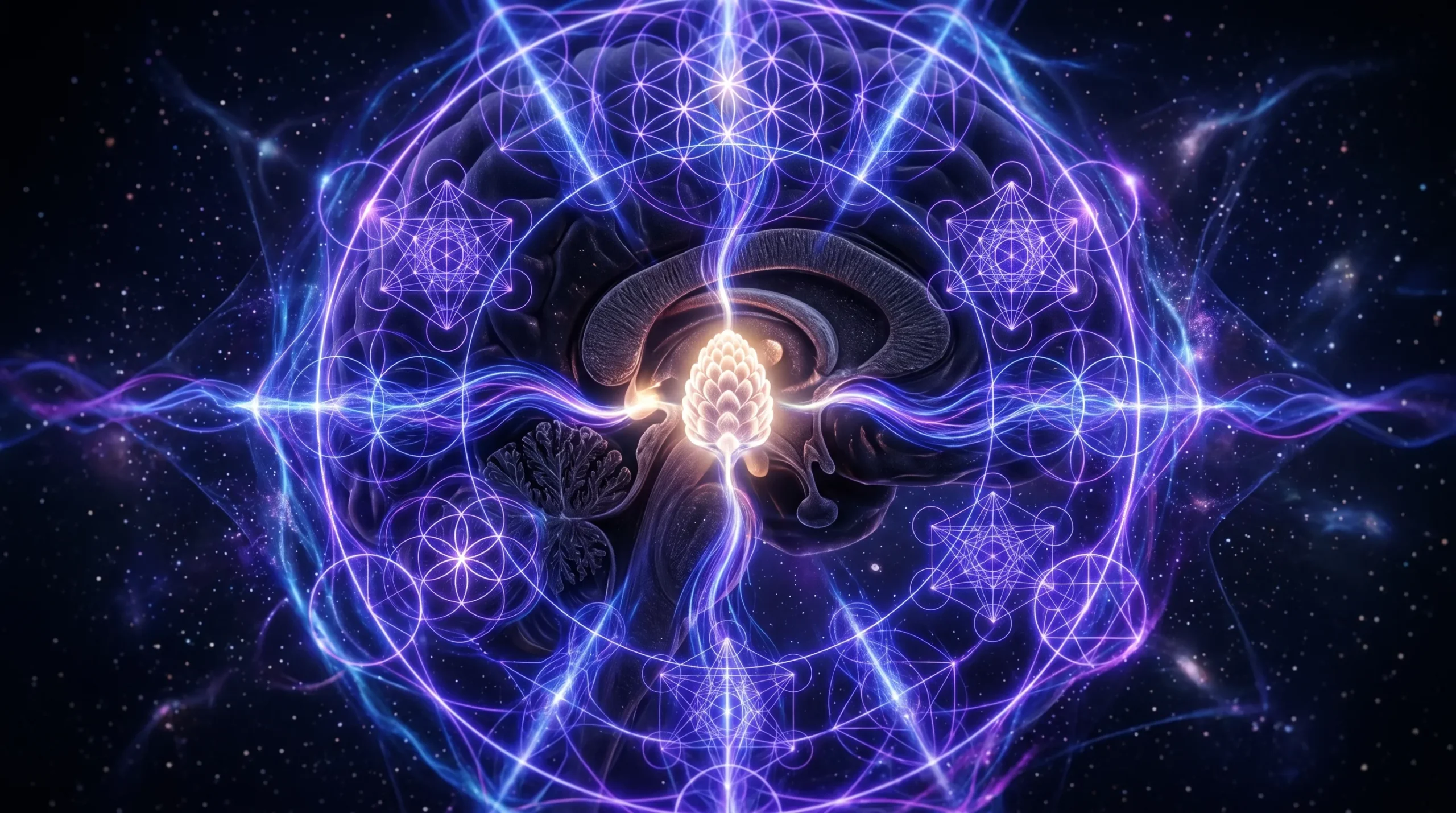
Sound frequencies like 936Hz resonate directly with the pineal gland, creating the vibrational conditions for third eye awakening
Healing frequencies are found in both spiritual and commercial offerings. Some advocate for 432Hz pineal tuning for its warmth and natural resonance. Others suggest 936hz frequency pineal gland for subtle-body alignment and third-eye sensitivity. These tones can create a calm baseline for deeper meditation with regular use.
Sound designers mix solfeggio tones with gentle instruments to ease attention shifts. This makes sessions more accessible, especially for beginners. Short sessions help build tolerance and allow for emotional response assessment before longer use.
Guided listening and entrainment
Binaural approaches use two tones to shift brainwaves. Many recommend binaural beats third eye tracks for relaxed focus. Using headphones is crucial for true entrainment.
Effective listening requires clear intent and regular practice. Start with five- to ten-minute sessions, increase gradually. Keep a journal to note changes in dream clarity, mood, or synchronicity.
Practical protocols and safety
Safe practice emphasizes grounding, moderation, and integration. Begin with low volume and short duration. Monitor heart rate and emotions. If anxiety or disorientation occurs, pause and return to breathwork.
Sound should enhance other routines like breathwork, movement, and sleep hygiene. The Esalen Institute and experienced meditation guides suggest combining audio with body-centered practices for stable progress.
Tools and daily habits
- Start: five minutes of 432Hz pineal-focused audio with gentle breathwork.
- Build: add two weekly sessions of binaural beats third eye training at theta range.
- Maintain: keep sessions under thirty minutes until consistent emotional equilibrium is observed.
Adopting sound tools with clear limits protects mental stability while deepening meditation. When used thoughtfully, frequencies like 432Hz pineal and 936hz frequency pineal gland aid in third-eye awareness.
🎵 Sound Opens the Gate — Nutrition Keeps It Open
936Hz frequencies resonate with your pineal gland. But without the right nutritional foundation, the gate closes again. Discover how to make your activation permanent.
Sungazing and controlled light exposure
Sungazing is a practice found in many traditions. It focuses on the eyes, breath, and inner sight. Yet, modern guides and yoga teachers warn of the dangers of staring directly at the sun. A safer way combines respect for tradition with evidence-based light practices that help activate the pineal gland.

Controlled morning light exposure is one of the most ancient and scientifically supported methods for supporting pineal gland sensitivity
Traditionally, sungazing is done at dawn or dusk when the sun is less intense. Practitioners start with short, repeatable exposures to build comfort. They avoid glare and follow medical advice to prevent eye damage.
Light entrainment and melatonin production rely on consistent cues to the brain's clock. Morning light helps the brain's clock align with the day. Following a regular morning routine and reducing blue light at night helps melatonin production.
Red and near-infrared light are gentler for supporting circadian rhythms. Clinicians use these lights to help with sleep and pineal sensitivity. This approach is safe and fits into daily routines without risking eye damage.
Practical safe-protocol checklist:
- Begin with short dawn exposures of under a minute, using peripheral or soft gaze.
- Prefer closed-eye sunlight at sunrise for a few minutes while breathing calmly.
- Use red/near-infrared lamps with recommended distances and timing for morning or evening sessions.
- Avoid direct midday sun-gazing and never use sunglasses that tempt longer staring.
- Maintain fixed sleep-wake times and limit blue light after sunset to protect light entrainment melatonin cycles.
Combining meditation and gentle breathwork with these habits supports pineal gland activation safely. A measured approach prioritizes retinal safety and views sungazing as part of a broader, science-informed path.
| Practice | Benefits | Safety Notes |
|---|---|---|
| Dawn indirect gaze | Improves circadian alignment, eases morning alertness | Keep exposures under 1–3 minutes; close eyes if uncomfortable |
| Closed-eye sunrise breathing | Activates gentle retinal stimulation, supports calm focus | Safe for most people; combine with grounding steps |
| Red / near-infrared therapy | Supports circadian health and pineal sensitivity | Use clinically rated devices; follow manufacturer timing |
| Strict night darkness | Promotes robust melatonin secretion and sleep quality | Avoid screens and bright lights 90 minutes before bed |
| Guided sungazing courses | Offers structured progression and community support | Choose reputable teachers and avoid unsafe direct-gaze claims |
Those who value safety and science will adopt lasting light habits. Consistent morning cues and careful use of red light strengthen rhythms that support pineal gland activation. This approach keeps eyes safe while nurturing the deeper goals of sungazing.
Nutritional support and pineal gland decalcification strategies
Making healthy choices helps the body. Eating right can help clean the pineal gland and keep hormones balanced. By choosing the right foods and herbs, we can fight off mineral buildup and help the body heal.

Strategic nutrition is the foundation of any serious pineal gland decalcification protocol
Key nutrients are all about keeping minerals in check and protecting against damage. Magnesium helps move calcium and signals cells. Boron keeps calcium metabolism and hormone work in check. Vitamin K2 guides calcium to bones, not soft tissues. Iodine keeps the thyroid and hormones in sync. Antioxidants like vitamin C and polyphenols fight off damage that leads to mineral buildup.
Healthy foods are easy to find. Leafy greens, nuts, seeds, fish, and fermented foods are full of magnesium, K2, and healthy fats. Sea veggies and iodized salt give you iodine. Berries, citrus, and green tea are packed with antioxidants and vitamin C. Eating whole foods helps keep the pineal gland clean over time.
Herbs and traditional botanicals are great for cleaning the body. Haritaki is used in Ayurveda for digestive health and detox. Many people use haritaki to help with pineal gland health. Chlorella helps remove metals from the body. Other herbs can also help detoxify gently when used correctly.
It's important to be careful with herbs. They can be strong and interact with medicines. A dietitian or naturopath can help make sure you're using herbs like haritaki safely. They'll make sure you're getting the right amount for your health.
Dietary habits to reduce calcification mean eating less processed food and keeping minerals balanced. Processed foods have too much phosphate and sodium, which messes with calcium. Drinking less sugary drinks, eating fewer packaged snacks, and cutting down on dairy helps keep your body working right.
Drinking enough water is key for removing waste and toxins. It helps the body move minerals properly. Drinking water, eating mineral-rich broths, and keeping electrolytes balanced helps your body stay healthy. Making small changes to your diet is easier and helps you stick to it.
Combining healthy foods, herbs, and lifestyle changes is the best way to support the pineal gland. This approach helps clean the pineal gland without being too extreme.
Supplements and targeted protocols: introducing Pineal XT
Pineal XT is a nutritional protocol aimed at supporting the pineal gland. It helps with decalcification and overall health. The supplement market offers many formulas with botanicals, minerals, and antioxidants. These products are meant to be part of a broader practice, not quick fixes.

Overview
Pineal XT combines nutrients and herbs for a focused regimen. It includes magnesium, boron, vitamin K2, iodine, and antioxidants. A review shows that how these ingredients work together is key.
Users see better sleep, improved dreams, and a clearer mind. This is when they use the supplement with lifestyle changes.
Integration with lifestyle
For activation, start with diet changes, good sleep habits, and meditation. Pineal XT works best with these habits. Eating less processed food and staying hydrated helps nutrient absorption.
Managing light in the evening and keeping a regular sleep schedule boosts melatonin. This enhances the supplement's benefits.
Ethical and practical framing
Esoteric traditions suggest combining material interventions with inner work. Using Pineal XT responsibly means adding practices like yoga and meditation. Always seek medical advice when needed. This approach sees Pineal XT as a supplement for personal growth and health.
Recommendation and next step
If you're interested in Pineal XT, look at reviews and ingredient lists first. For those ready to learn more or buy, check out the recommended resource. This step is part of a journey toward better sleep, focus, and third eye support.
Targeted Nutritional Protocol
Pineal XT: Designed for Serious Seekers
A precise blend of decalcifying nutrients and botanical extracts, formulated to support pineal gland health and accelerate your spiritual clarity journey.
Practical daily routine to support third eye awakening
They suggested a daily plan that mixes simple practices, lifestyle choices, and supplements. A steady routine boosts resilience and reduces stress. It also helps activate the pineal gland.
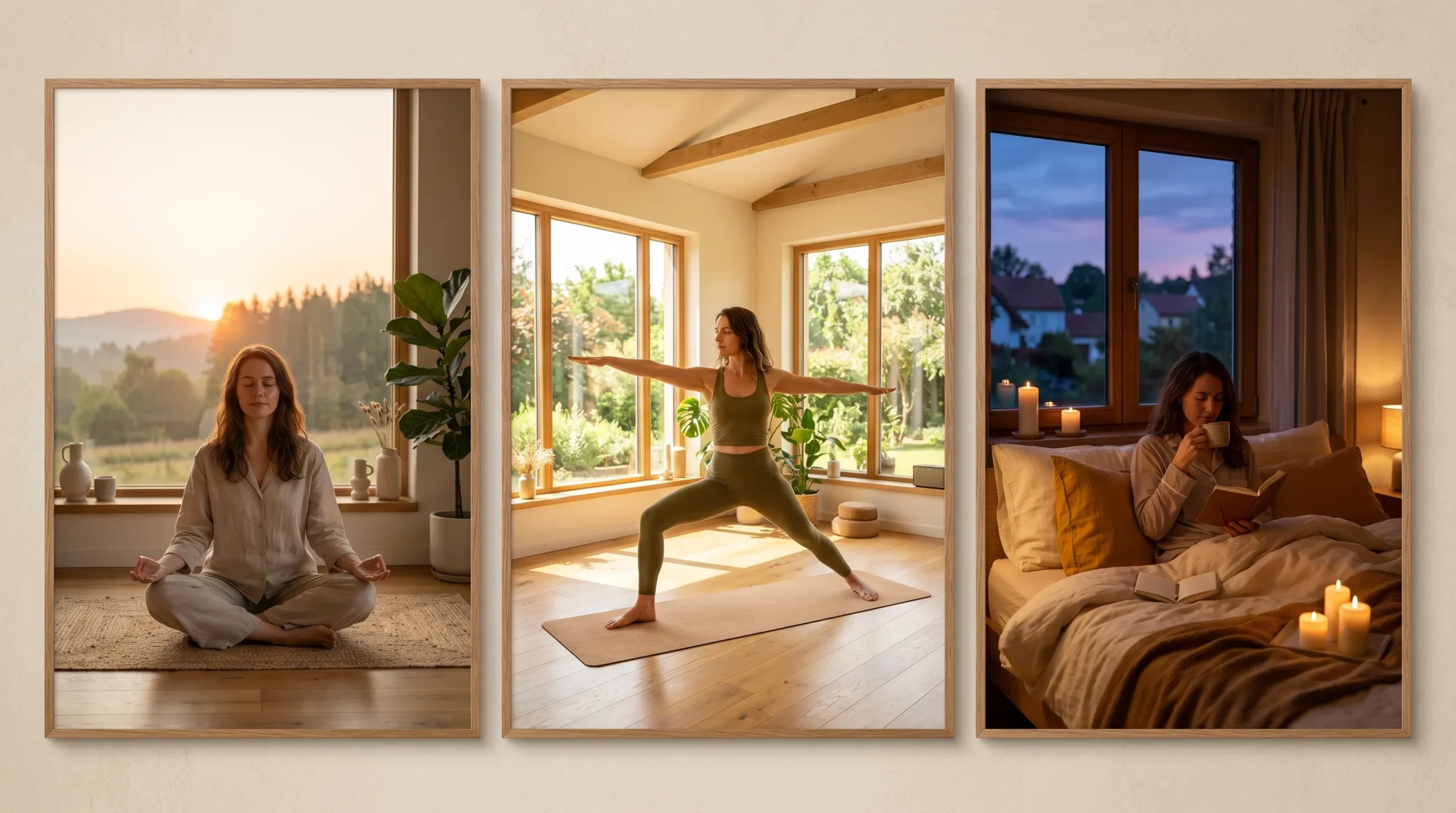
A consistent daily routine — combining light, movement, nutrition and meditation — is the most reliable path to sustained third eye awakening
Morning
At dawn, she stood by a window for safe, short light exposure. This morning ritual third eye started with three minutes of deep breathing or Nadi Shodhana. It centered her attention.
A brief yoga sequence with gentle inversions followed. This increased blood flow to the head without strain.
Breakfast included whole foods rich in tryptophan and magnesium. These foods support serotonin pathways. Hydration and a short walk detoxified the body and kept energy steady.
Midday
Midday focused on mindful movement and balanced meals. Simple bodyweight sequences or a twenty-minute walk kept circulation and clarity. Choices aimed to reduce processed foods and support balanced neurotransmitters.
She kept distance from routers and phones during rest. Device limits reduced EMF exposure. Small pauses for breathwork focused on the Ajna area and reinforced pineal activation.
Evening
In the evening, the aim was darkness and calm. Blue light was reduced two hours before bed. This preserved melatonin rhythm.
A short Ajna-focused meditation of five to ten minutes prepared the mind for sleep. Consistent sleep timing and attention to pineal gland sleep hygiene were key. Magnesium or a formula like Pineal XT could support restorative sleep and pineal health.
Integration and practice
Regular retreats or silent days anchored deeper integration. Ethical living, steady personality work, and monitoring mental health kept awakening stable. This balanced blueprint offered a realistic, sustainable path for third-eye growth.
Final Verdict
Your Third Eye Deserves More Than Intention
Meditation, sound, and lifestyle practices create the conditions for awakening. Pineal XT provides the biological foundation. Together, they form the most complete third eye activation protocol available today.
Conclusion
The pineal gland is key for inner growth and psychic work. It needs care and attention. We use meditation, yoga, sound, and good nutrition to help it.
These methods work well with the gland's role in making melatonin and helping us sleep. This is backed by science.
For those looking to awaken their third eye, it's important to grow ethically. True progress comes from integrating your personality and practicing regularly. It's also wise to choose supplements like Pineal XT carefully.
Remember, a balanced lifestyle is crucial. It protects your sleep, light exposure, and keeps your body's chemistry in check.
If you want to open your third eye, start slowly. Meditate, practice breathwork, and do mindful exercises. Eat well and use supplements wisely. Be ready to grow psychologically.
Stick to steady, healthy practices. This will help you grow and serve others. It's a practical way to awaken your third eye.
FAQ
What is the pineal gland and why do traditions call it the “third eye”?
The pineal gland is a small gland in the brain. It helps control our sleep-wake cycles. It's also linked to inner vision and spiritual awareness in many cultures.
How does the pineal gland actually work in scientific terms?
The pineal gland gets light information from the eyes. It makes melatonin at night to help us sleep. It's connected to serotonin and tryptophan, which affect our mood and sleep.
Some theories suggest it makes DMT, but there's no solid proof in humans. Brain chemistry can create DMT, but more research is needed.
Can lifestyle factors cause pineal gland calcification, and what are the main contributors?
Yes, lifestyle choices can lead to pineal gland calcification. Too much fluoride, processed foods, and artificial light can harm it. Improving diet and sleep is key.
What are common signs that the third eye is “awakening”?
Signs include sharper intuition, vivid dreams, and heightened senses. You might also need less sleep and feel more clear inside. These changes take time and need careful handling.
Is the DMT–pineal gland connection proven? Should people pursue it to experience mystical states?
The idea that the pineal gland makes DMT is intriguing but not proven. It's based on biochemical studies and animal data. Experts warn against using drugs for spiritual experiences without proper guidance.
What safe practices are recommended to support pineal health and third eye activation?
To support pineal health, follow a balanced routine. This includes morning light, good sleep, and healthy food. Daily meditation and gentle exercises help too.
Using sound tools like binaural beats can enhance meditation. But remember to integrate these practices slowly and mindfully.
Are supplements useful for pineal decalcification and activation? What is Pineal XT?
Supplements can help but aren't enough on their own. They should be part of a healthy lifestyle. Pineal XT is a supplement that aims to support pineal health. It's best used with other practices like meditation and good sleep.
How should someone structure a daily routine to support third eye awakening safely?
Start with morning light and gentle exercises. Eat balanced meals and avoid blue light at night. Use supplements like Pineal XT if needed.
Regular meditation and retreats help too. Always focus on integration and emotional balance.
Is sungazing recommended to activate the pineal gland?
Sungazing is not recommended due to eye risks. Instead, try indirect dawn light or red light therapy. These methods are safer and support natural sleep cycles.
What precautions should people take when pursuing third eye activation?
Approach third eye activation with caution and integration. It's important to be emotionally mature and grounded. Avoid using drugs or extreme practices.
Work with experienced guides and monitor your mental health. Use supplements like Pineal XT responsibly and with professional advice.
How do sound frequencies like 936Hz help the pineal gland, and how should they be used?
Sound frequencies like 936Hz can calm the mind and deepen meditation. Use them in short sessions to support inner perception. Always stay grounded and monitor your emotional response.
Where can readers learn more or try a targeted pineal support product like Pineal XT?
For more on Pineal XT, visit the manufacturer's website. Remember, it's part of a broader plan for activation. Always prioritize a balanced lifestyle and consult a doctor before starting supplements.
👁️ Complete Pineal Gland & Third Eye Research:
🔬
Decalcification Protocol:
Pineal Gland Decalcification — How to Remove Calcification and Restore Your Third Eye
💊
Supplement Science:
Pineal Gland Supplements — Top 5 Nutrients for Decalcification and Third Eye Activation
Leave a Reply