
Binaural Beats for Meditation: The Science of Sound-Guided Brain States

The concept of binaural beats for meditation dates back to the 19th century. It became more popular thanks to research by Heinrich Wilhelm Dove and Robert Oster. When you listen to two different tones in each ear, your brain creates a third sound. This sound oscillates between 1–30 Hz, which is close to natural brain waves.
This article looks into the science behind binaural beats. It explains how they work in the brain and reviews studies on their effects. It also talks about the idea that sound can influence our brain states.
It offers tips on using binaural beats for meditation, relaxation, focus, and sleep. It also discusses their limitations and safety. You'll learn about the differences between binaural, isochronic, and monaural beats. Plus, how to use them for deep meditation.
Key Takeaways
- Binaural beats for meditation are created when slightly different frequencies reach each ear and the brain perceives a difference tone.
- Research on binaural beats science shows measurable frequency-following responses but mixed results on consistent entrainment effects.
- Understanding how binaural beats work helps set realistic expectations about benefits and limitations for anxiety, focus, and sleep.
- Practical use involves headphone delivery, appropriate session lengths, and attention to individual responses.
- This guide combines neuroscience, practical protocols, and comparisons to isochronic and monaural approaches for meditators.
What Are Binaural Beats and How They Work
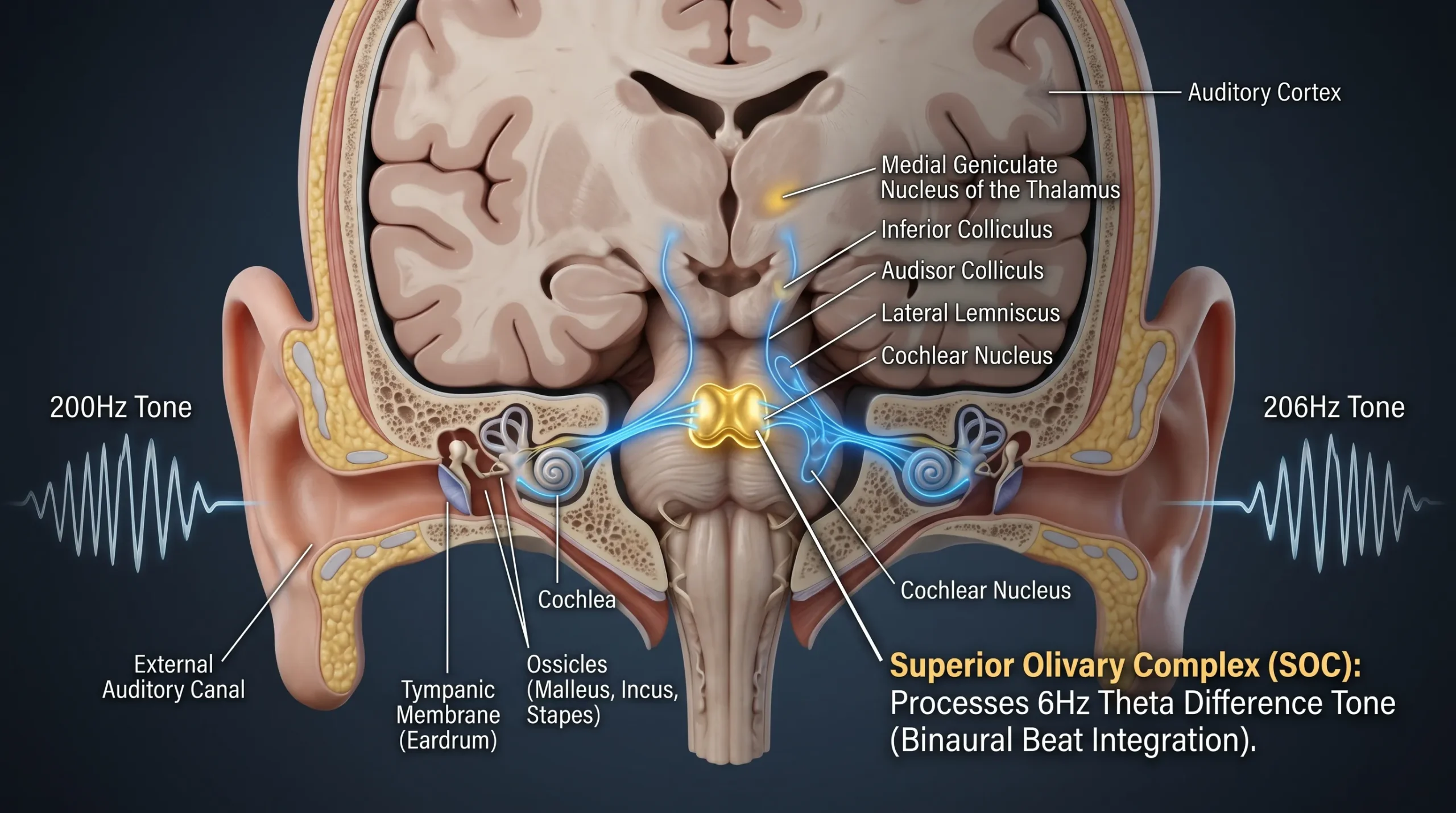
Binaural beats are an auditory illusion. They happen when the brain hears two different tones, one in each ear. People feel a third sound that seems to be inside their head.
This simple phenomenon has sparked interest in its effects on the mind. Researchers and meditators wonder if this phantom pulse can change mental states.
Definition and psychoacoustic basis
When one ear hears a tone and the other a different one, a new rhythm is felt. For example, 400 Hz in one ear and 420 Hz in the other create a 20 Hz beat. This beat is not real sound but a creation of the brain.
How presenting two different frequencies to each ear creates a perceived third frequency
The beat we feel is the difference between the two tones. If one ear hears 440 Hz and the other 444 Hz, we feel a 4 Hz oscillation. This is the basis for experiments aiming to align brain rhythms with specific frequencies, like binaural beats theta waves for meditation.
Role of the superior olivary complex and neural origin of the percept
The superior olivary complex in the brainstem is where signals from both ears meet. It's the first step in creating the illusory beat. Neurons there are sensitive to the timing of these signals.
Limits and constraints on perception
Binaural beats have practical limits. Carrier frequencies above 1 kHz rarely work well. Tones near 400 Hz are best. The difference between tones also matters.
Headphones are key for a clear experience. They keep each tone in one ear. Room speakers mix the signals and don't produce the same effect.
Individual hearing and focus can affect how well we notice the beat. Researchers are interested in how binaural beats can influence brain activity. They see potential in using binaural beats theta waves for meditation and creativity.
🧠 What Is Your Subconscious Telling You?
Theta meditation opens the gateway — but knowing how to read what emerges from your subconscious is an equally important skill. Discover the most common signals your subconscious sends and how to decode them:
Read: Signs Your Subconscious Is Trying to Tell You Something →
Understanding the Frequency-Following Response and Brainwave Entrainment
The brain reacts to sound patterns in ways we can measure. Researchers use tools like EEG and MEG to study how sound affects our brain. They look at how steady tones and beats change our brain activity.
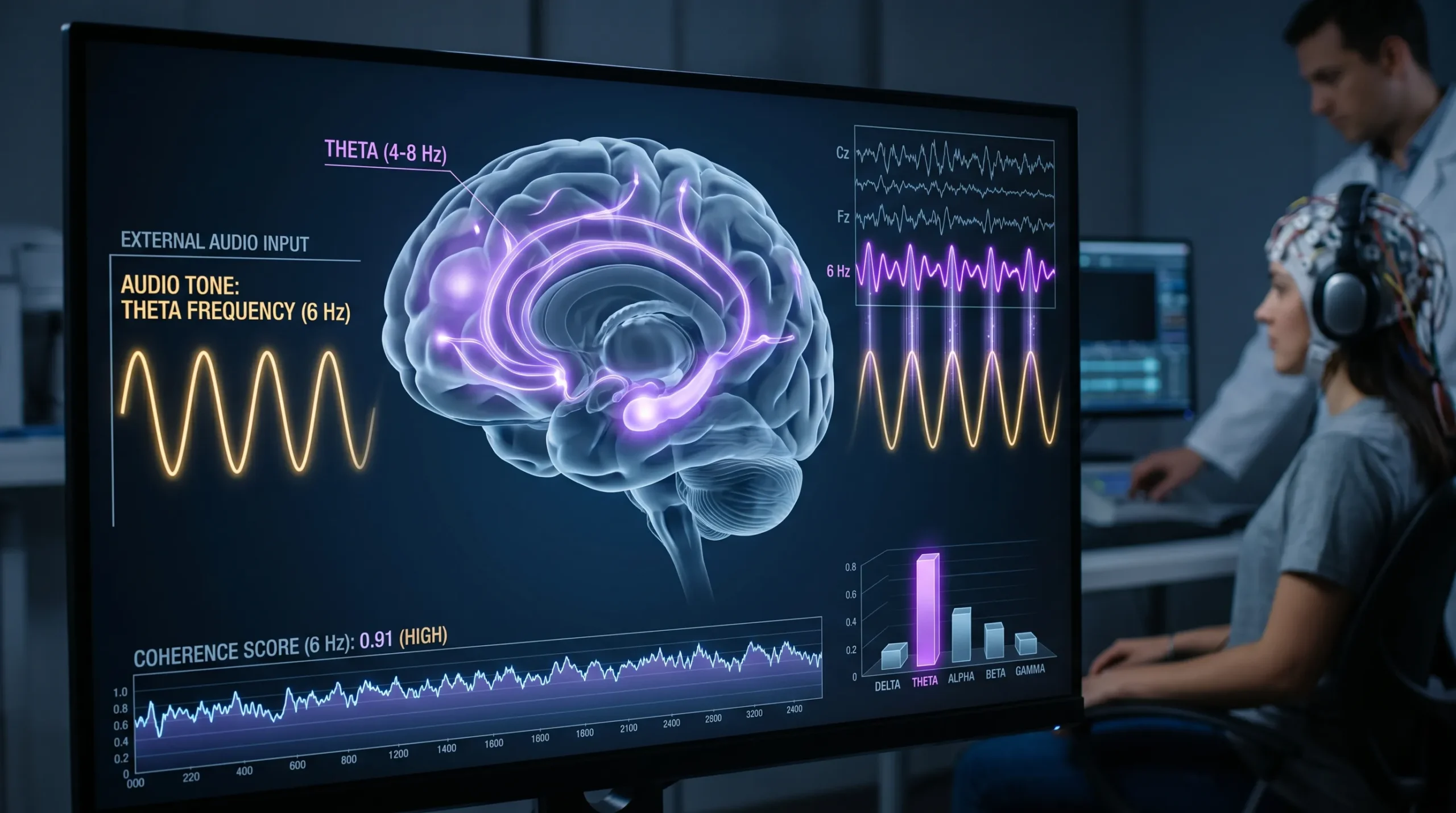
What the frequency-following response is and how it’s measured
The frequency following response is when our brain activity matches the sound we hear. Scientists use EEG and MEG to find these matches. Studies on binaural beats show that our brain responds to these sounds in specific ways.
Brainwave entrainment hypothesis and its theoretical basis
The brainwave entrainment idea says that sound can change our brain waves. It suggests that listening to certain rhythms can help us relax or focus. This idea is based on how our brain responds to sound.
Auditory steady-state responses and evidence for time-locked neural responses
Auditory steady-state responses are signals in our brain that last as long as the sound. They show that our brain is actively responding to the sound. Studies on binaural beats have found evidence of these responses, supporting the idea of time-locked neural responses.
Why research results are mixed: methodological heterogeneity and measurement differences
Studies vary in many ways, like the sound used and how it's measured. This makes it hard to compare results. A review found mixed results, showing that different approaches can lead to different conclusions.
The table below compares common study factors that influence detection of entrainment and FFR/ASSR signals.
| Study Factor | Typical Variations | Impact on Detection |
|---|---|---|
| Carrier frequency | 200 Hz to 1000 Hz | Affects cochlear encoding and binaural integration; low carriers may reduce signal-to-noise |
| Beat frequency | 1–40 Hz (delta to gamma) | Determines which EEG band to analyze; higher beats require different analysis windows |
| Presentation mode | Headphones vs. speakers | Headphones ensure lateralized input needed for binaural beats; speakers can confound results |
| Recording method | EEG vs. MEG | MEG offers better spatial resolution for cortical sources; EEG is more common and cost-effective |
| Analysis metric | Time-locked phase measures, spectral power, connectivity | Different metrics capture different aspects of entrainment and may produce divergent findings |
| Stimulus duration | Short (seconds) vs. long (minutes) | Longer exposure can increase detectability but raises adaptation and attention confounds |
| Control conditions | Sham beats, pure tones, silence | Choice of control alters baseline comparisons and can mask subtle entrainment effects |
👁️ Amplify Your Results at the Biological Level
The Genius Wave activates theta states through sound. But the pineal gland — your brain's biological third eye — needs targeted nutritional support to sustain and deepen those states. Discover the decalcification protocol that completes the picture:
Read: Pineal Gland Activation — The Spiritual Science Behind Your Third Eye →
Binaural Beats for Meditation
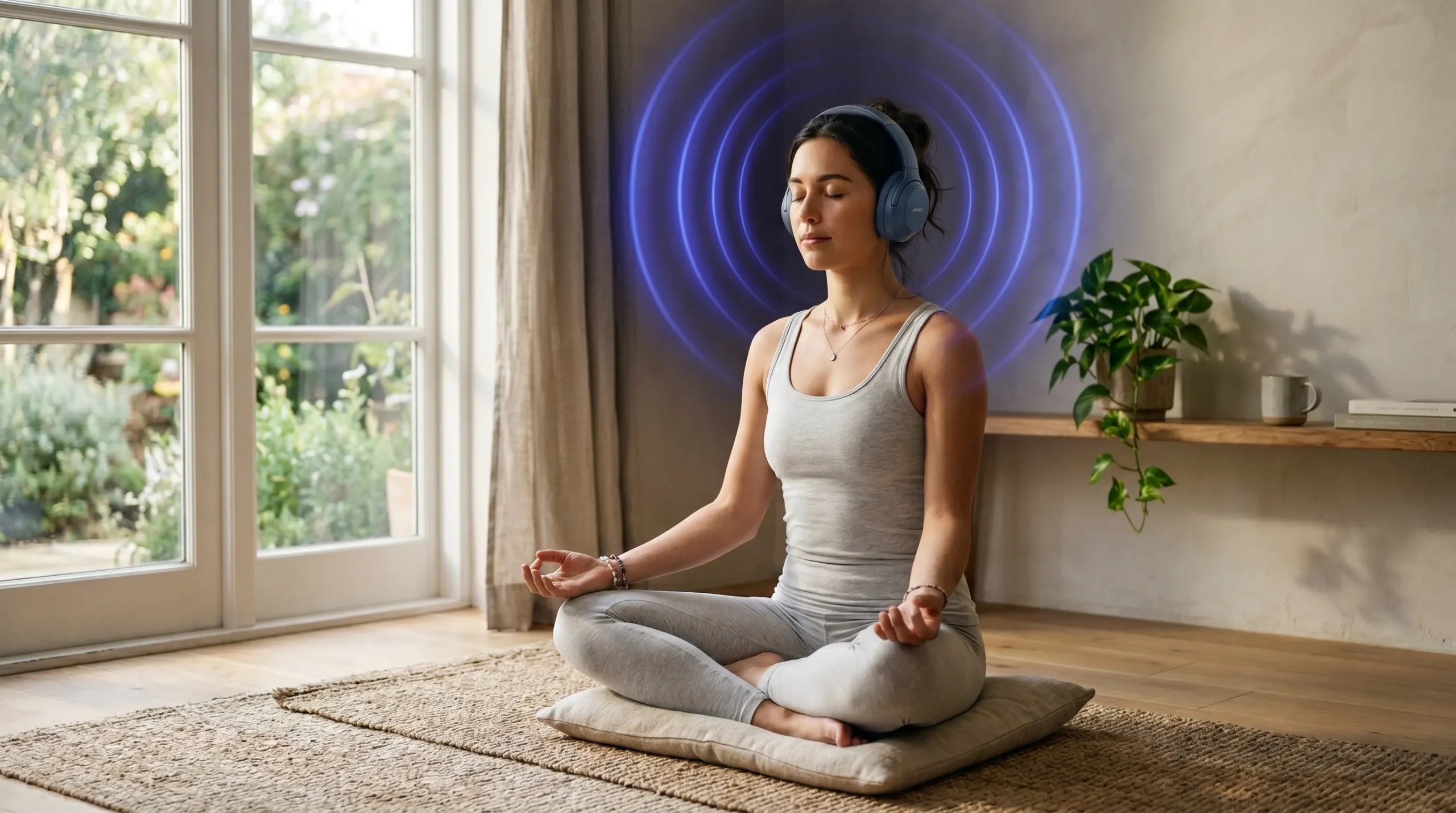
Many people use sound to help them relax. Binaural beats for meditation work by playing different tones in each ear. This creates a beat that can help you feel calm and focused.
Why people use sound to aid calm
Audio helps some people relax faster. Studies show it can lower anxiety and improve mood. It's also used to help with sleep and creativity.
What subjective studies report
People's experiences vary. Some say it helps them focus on their breath and relax deeply. Others don't notice any difference. This shows that results can depend on many factors.
Practical listening guidelines
Use good headphones to keep the sound clear. Choose a carrier tone near 400 Hz for better perception. Set the beat frequency to match your goal, like 4–8 Hz for relaxation.
Start with a few minutes of deep breathing. Sit or lie down in a quiet place. Close your eyes or look softly ahead. After the music stops, take a few minutes to relax.
Limits and individual differences
Everyone reacts differently. Your focus, age, and meditation experience can affect how you feel. Some people find the beats distracting, not calming. Not everyone shows brain wave changes, so effects can be personal.
If you have questions or concerns, talk to a healthcare professional. Knowing how binaural beats work helps you understand their benefits and limitations.
| Aspect | Recommendation | Rationale |
|---|---|---|
| Headphones | High-quality stereo headphones | Preserve left/right channel separation for clear binaural perception |
| Carrier frequency | ~400 Hz | Offers a distinct tone that supports perception of the beat |
| Beat frequency | 4–8 Hz for theta; 8–14 Hz for alpha | Aligns with desired meditative band and reported benefits |
| Session length | 10–30 minutes typical; 5–60 minutes possible | Balances time for relaxation with attention span and study protocols |
| Posture and setting | Sit or recline, quiet room, minimal light | Reduces external stimuli and supports inward focus |
| Expectations | Variable outcomes; some benefit, some none | Individual differences and methodological factors drive mixed findings |
🎧 Ready to Experience Deep Theta Meditation?
The Genius Wave combines theta binaural beats, isochronic tones and ambient harmonics into one 7-minute daily protocol — the most complete audio entrainment experience available for meditators.
The Main EEG Frequency Bands and Their Effects
The brain goes through different rhythms that affect sleep, meditation, focus, and creativity. By choosing the right beat frequencies, we can enter states like deep rest, intuitive insight, or calm alertness.
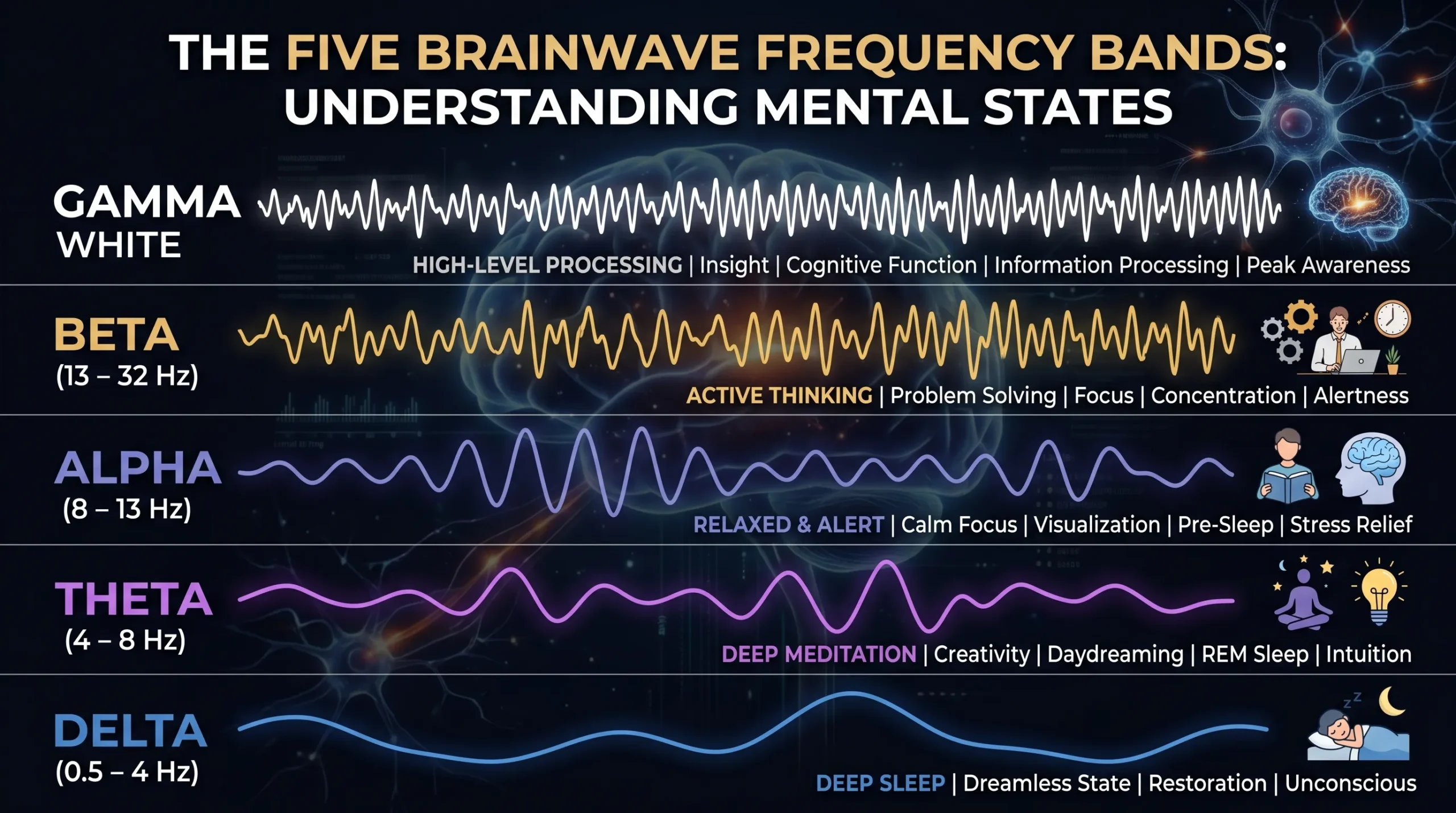
Delta (1–4 Hz)
Delta is linked to the deepest sleep and healing. Many practices aim for delta to help the body repair itself and for deep meditation. Some use delta binaural beats during naps to promote slow-wave sleep.
Theta (4–8 Hz)
Theta is present in light sleep and meditation, linked to creativity and intuition. It's used to access the unconscious and for gentle imagery. Short sessions with binaural beats theta waves can improve insight and relaxed problem solving.
Alpha (8–14 Hz)
Alpha is about calm alertness and relaxed focus. It's favored by students and creative professionals for stress reduction and better learning. Many use alpha binaural beats to help focus without effort.
Beta (14–30 Hz) and Gamma (30+ Hz)
Beta is for active thinking, analysis, and sustained attention. Gamma is for high-level thinking and complex processing. Those looking to improve task performance often use higher frequencies.
| Band | Frequency (Hz) | Typical Uses | Common Listening Goal |
|---|---|---|---|
| Delta | 1–4 | Deep sleep, body repair, recovery | Promote restorative sleep with delta binaural beats |
| Theta | 4–8 | Meditation, creativity, intuition | Access relaxed insight using binaural beats theta waves |
| Alpha | 8–14 | Relaxed focus, stress reduction, learning | Support calm concentration with alpha binaural beats |
| Beta | 14–30 | Focused thinking, problem solving | Enhance alertness and task performance |
| Gamma | 30+ | High-level cognition, memory, attention | Strengthen complex processing and integration |
The Power of Theta Binaural Beats (4–8 Hz)
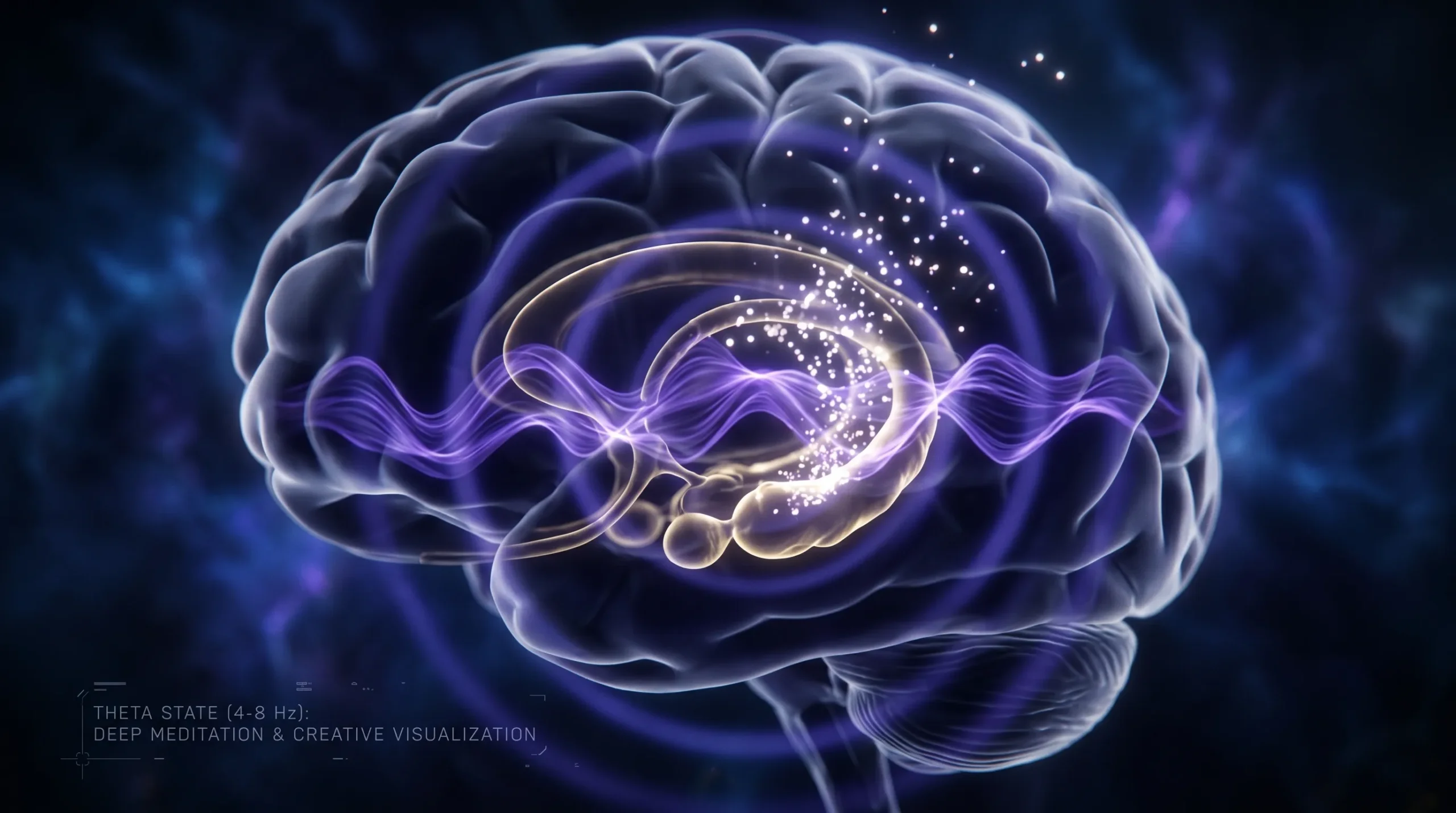
The theta band is between 4–8 Hz. It's linked to deep focus, creativity, and spiritual awareness. People seek this range for deeper, more intuitive thinking.
Why theta matters
Theta rhythms happen in light sleep, deep meditation, and vivid imagination. Musicians and artists find it boosts intuition and creativity. Studies show it can change brain waves for some people.
Reported benefits and limits
People say it leads to deep relaxation, creativity, and insights. It's also good for sleep and meditation. But results can vary.
Neuroscience findings
Studies show the brain can respond to theta beats. But not everyone feels the effect. The brain's networks play a role in this.
Practical session guidance
For focused meditation, 10 to 30 minutes is best. Short sessions are good for quick breaks. Longer ones are for deeper rest or sleep.
Using theta binaural beats for meditation
For meditation, choose a comfy spot and quiet place. Use headphones for the best sound. Track your progress and be patient for the best results.
Theta Is Where the Magic Happens
Access Deep Theta States in Just 7 Minutes
Creativity, intuition, emotional healing and spiritual awareness all emerge from theta states. The Genius Wave delivers precision-targeted 4-8Hz entrainment so you can access these states consistently — every single day.
Comparing Binaural Beats to Isochronic Tones and Monaural Beats
Exploring sound-based meditation reveals clear differences among common audio methods. This section highlights key contrasts, practical uses, and when combining approaches enhances the experience.
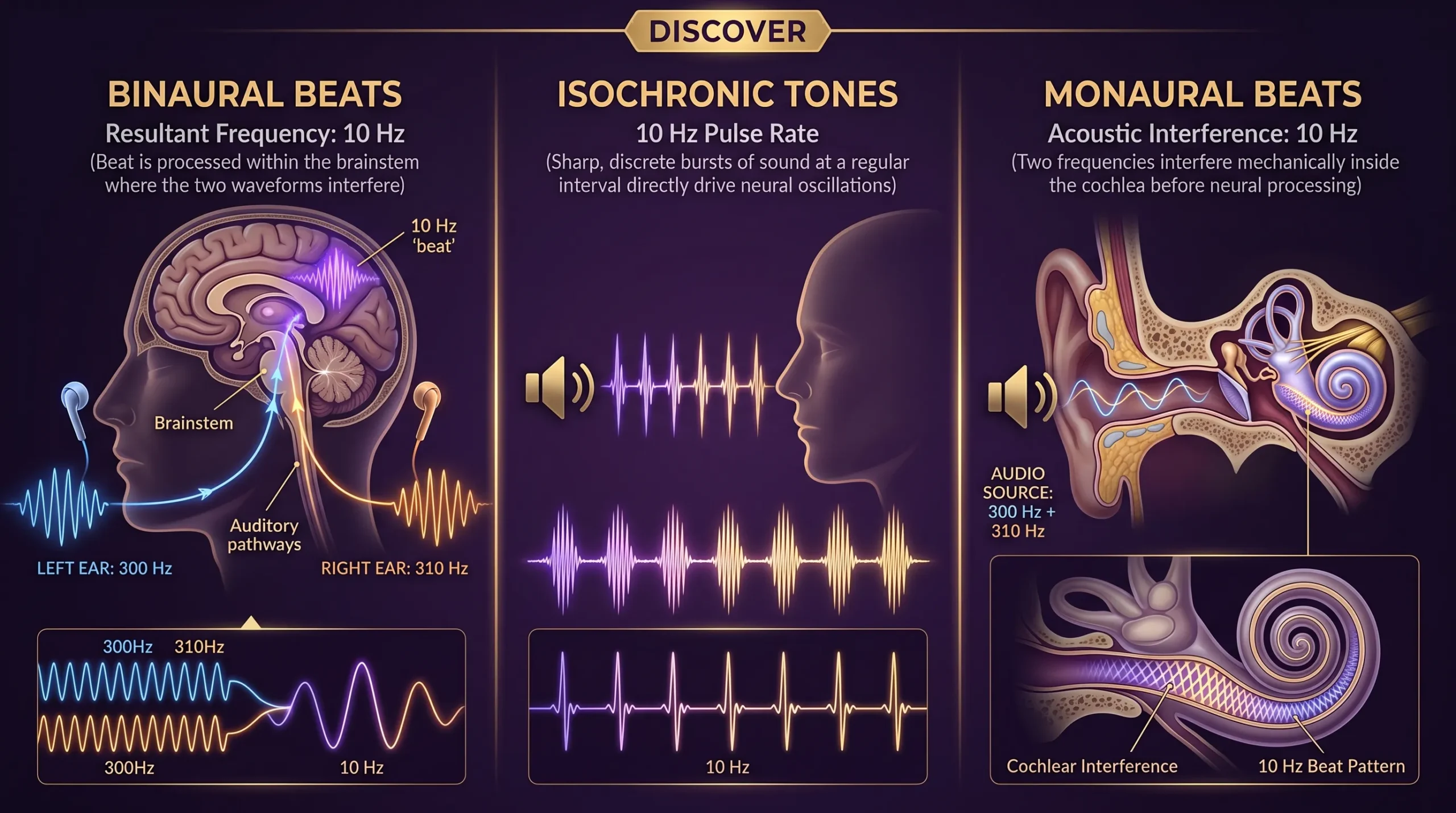
Isochronic tones are steady pulses of sound with distinct on-off spacing. They produce strong amplitude modulation that the brain can follow directly. Binaural beats form inside the brain when two slightly different tones reach each ear separately. This neural percept depends on headphone delivery and subtle phase processing in the superior olivary complex.
Advantages of isochronic tones for speaker use
Isochronic tones work well through speakers because physical amplitude changes reach both ears simultaneously. People using group meditation or sitting without headphones often prefer this approach. For practitioners who want clear, immediate rhythmic stimulation, isochronic tones meditation can be more reliable than headphone-only methods.
Monaural beats: cochlear interference vs. binaural neural integration
Monaural beats arise when two nearby frequencies mix in one channel or speaker, creating direct interference at the cochlea. This makes them audible without headphones across a wide range. Binaural beats vs isochronic differ in mechanism: binaural beats rely on neural phase detection, while monaural beats and isochronic tones deliver physical amplitude patterns to the ear.
When to choose combined approaches
Combining binaural beats with isochronic tones and ambient harmonics can layer entrainment pathways. Binaural elements offer subtle phase-based integration. Isochronic pulses supply robust amplitude modulation. Ambient harmonics add emotional and aesthetic depth. Advanced audio programs by established producers often use these layers to balance subtlety, power, and listener comfort.
- Use isochronic tones meditation for speaker-based sessions or when immediate entrainment is desired.
- Choose binaural beats for private headphone practice that targets neural phase processing.
- Consider adding monaural beats or combined layers when seeking broader perceptual impact or richer soundscapes.
Practical Usage: Headphones, Speakers, Timing, and Listening Protocols
This guide helps meditators set up safe, effective sessions with sound. It covers the choice between headphones and speakers, optimal times and lengths for practice, volume and carrier frequency tips, safety flags, and a simple session structure to follow.
Headphones versus speakers
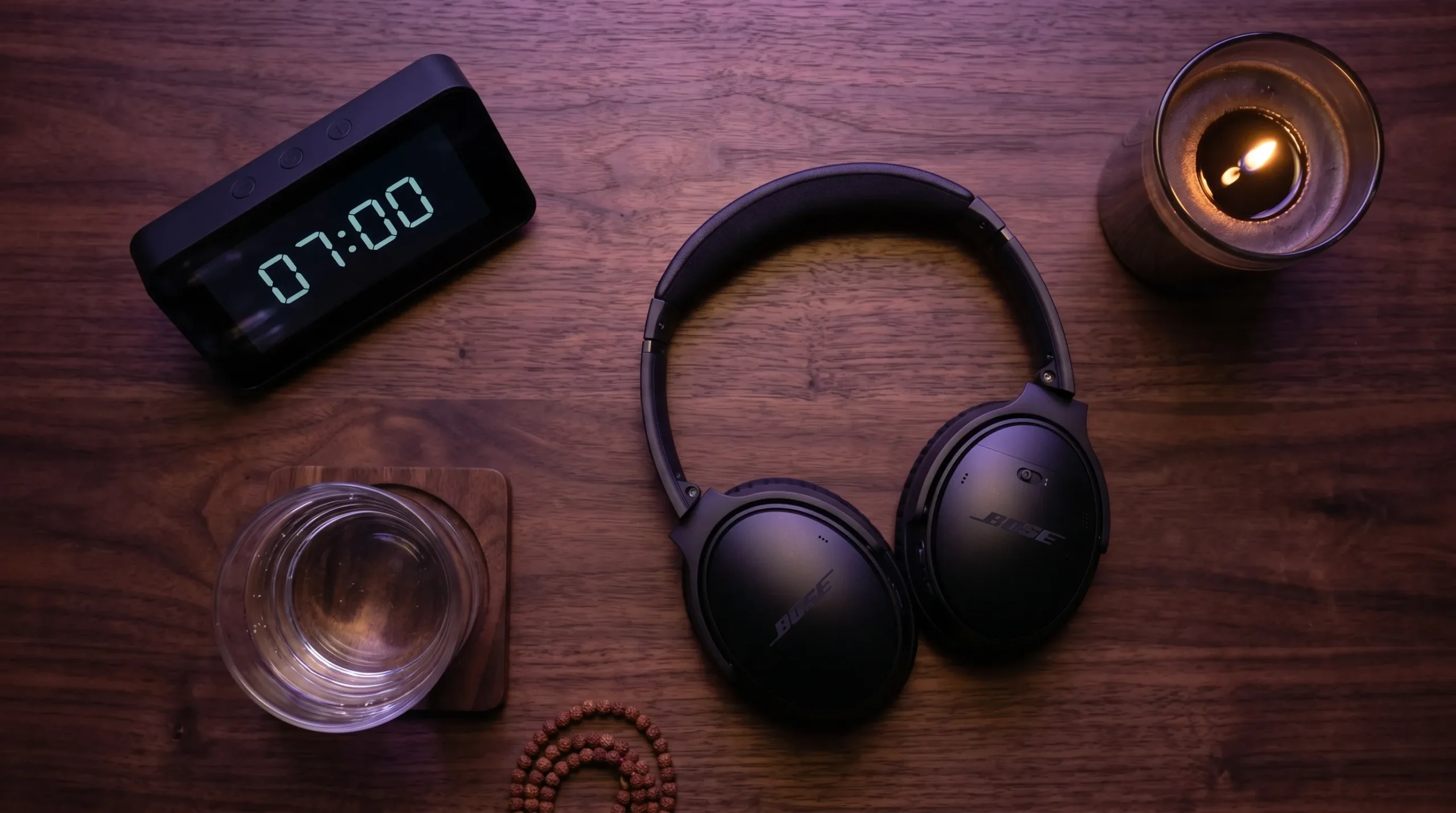
For true binaural perception, use quality stereo headphones. They deliver separate left and right channels. This allows the brain to form a binaural beat in the superior olivary complex.
Using speakers can mix left and right signals in the air. This produces monaural or isochronic effects instead of the intended neural integration.
Best times and session duration
Short daily sessions tend to yield the most consistent results. Beginners often start with 10–20 minutes. Five-minute practices can refresh attention; 30-minute sits support deeper states.
Morning sessions prime focus. Midday breaks restore calm. Evening listening aids winding down or sleep, depending on target frequency: theta and delta support rest, alpha supports relaxation, beta and gamma support alertness.
Volume and carrier frequency guidance
Keep volume comfortable and steady. It should be loud enough to hear tones clearly without causing ear strain. A carrier frequency near 400 Hz often yields a clearer binaural effect for many listeners. Lower or higher carriers work but can change timbre and perceived clarity.
Safety considerations
Binaural beats for meditation are low risk for most people. Listeners who are pregnant, have epilepsy, are prone to seizures, or live with certain psychiatric conditions should consult a healthcare professional before regular use. Do not drive or operate heavy machinery while listening. Stop use if dizziness, headache, or increased anxiety occur.
How to structure a guided session
Use a three-part protocol for predictable results. Start with a warm-up of 2–5 minutes of breath awareness or a gentle body scan. Move into an entrainment phase of 10–30 minutes where the binaural track plays while the person keeps a relaxed, stable posture. Finish with 5–10 minutes of integration: silent reflection, slow stretches, or journaling to consolidate the state.
Practical tips for hybrid setups
If speakers are the only option, choose isochronic or monaural beats designed for loudspeaker delivery. For mixed audio—voice guidance plus beats—place the beat carrier in the mid frequencies and keep spoken guidance softer so it does not mask the carrier frequency. This helps maintain perceptual clarity during guided work.
| Element | Recommended Practice | Why it matters |
|---|---|---|
| Hardware | Closed-back stereo headphones (wired or high-quality Bluetooth) | Ensures distinct left/right channels for authentic binaural beats |
| Session Length | 10–20 minutes daily; 5–30 minutes depending on goal | Balances efficacy with attention span and comfort |
| Timing | Morning for focus, midday for calm, evening for winding down | Aligns brain state targets with daily rhythms |
| Carrier Frequency | Approx. 400 Hz as starting point; adjust by preference | Promotes clear binaural perception without harsh timbre |
| Volume | Comfortable, non-fatiguing level; avoid prolonged loud exposure | Prevents hearing damage and reduces distraction |
| Safety | Consult clinician if pregnant, epileptic, or with psychiatric history | Protects vulnerable individuals from adverse effects |
| Structure | Warm-up → Entrainment → Integration (2–5 / 10–30 / 5–10 min) | Supports gradual entry and gentle exit from meditative states |
⚡ The Setup Is Simple — The Results Are Profound
Headphones on. Volume comfortable. Seven minutes. That is the complete Genius Wave protocol — designed to fit into any schedule and deliver deep theta entrainment from the very first session.
Do Binaural Beats Really Work? Research, Limitations, and What Science Says
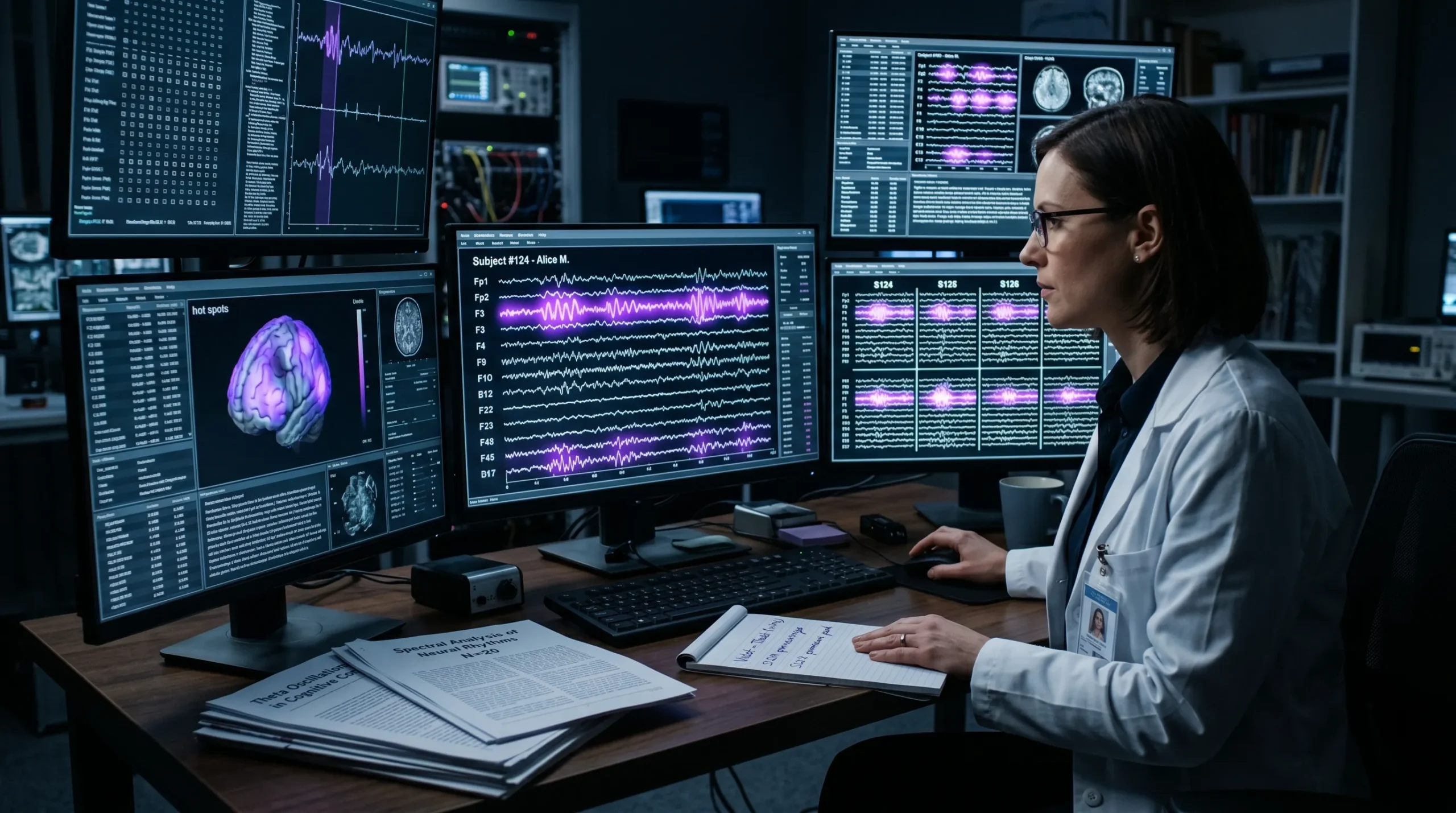
Scientists have looked into if listening can change brain rhythms and mood. They've done everything from lab tests to big home studies. People who wonder if binaural beats work will find both yes and no answers in studies.
A review of 14 EEG studies showed mixed results. Five studies said binaural beats might work, eight said they don't, and one was unsure. It's hard to compare because of different sounds and tasks.
How studies are set up matters a lot. Things like how long the sounds last, whether they're continuous or in bursts, and what participants do can change the results. Even how EEG data is analyzed can lead to different conclusions.
Some studies found binaural beats can help with anxiety, sleep, and creativity. But a big 2023 study found they might actually hurt performance on some tasks. This shows that effects can vary a lot.
Many people try binaural beats hoping for relaxation or creativity. But how they work can vary a lot. Some people might feel better right away, but lasting effects are not proven yet.
Researchers want more standard ways to study binaural beats. This would help make results more reliable. It would also help prove if binaural beats really do what they claim.
Until then, people can try binaural beats without much risk. But they should remember that everyone reacts differently. Combining audio with meditation can help make up one's mind based on personal experience.
Science Says Yes
Low Risk. High Potential. Try It For Yourself.
The research supports real benefits for anxiety, sleep and creativity. The Genius Wave is backed by a satisfaction guarantee — so the only thing you risk is 7 minutes of your day.
Common Questions About Using Binaural Beats for Meditation

Many people wonder about using binaural beats for meditation. This guide answers common questions. It covers how long to listen, if beats can replace teaching, possible side effects, and how to know if the brain is following the beat.
How long to listen to notice effects?
How long it takes to feel the effects of binaural beats varies. Some people feel relaxed or in an altered state after just 5–20 minutes. Studies show sessions can last from 5 to 30 minutes.
Starting with 10–15 minutes is a good idea for beginners. They can then adjust as needed. Tracking how you feel after listening can help you find what works best for you.
Can binaural beats replace formal meditation practice?
Binaural beats are best used as a supplement, not a replacement. They help with focus, relaxation, and getting into a meditative state. But, they don't teach the skills that traditional meditation does.
Teachers like Sharon Salzberg and Jon Kabat-Zinn stress the importance of consistent practice. Binaural beats can enhance your meditation, but they shouldn't be the only thing you use.
Who should be cautious or avoid them?
Most people can use binaural beats safely. But, certain groups should talk to a doctor first. This includes people with epilepsy, serious mental health issues, medical implants, or who are pregnant.
Some people might feel a headache, dizziness, or a slight increase in anxiety. It's best to avoid using them while driving or doing anything that requires your full attention. If you experience any negative effects, stop and get advice.
How can someone tell if entrainment is happening?
Signs of entrainment can be personal. You might feel more relaxed, time seems to change, or you get creative ideas. These feelings can happen right away or with regular use.
But, to really know if your brain is entrained, you'd need an EEG or MEG. These tests show changes in brain activity. Since most people can't get these tests, paying attention to how you feel is the best way to know.
Here's a quick guide to help you plan your sessions and stay safe. It shows typical session lengths, what to look for, and when to seek professional advice.
| Aspect | Typical Recommendation | Subjective Signs | When to Seek Advice |
|---|---|---|---|
| Session length | Start 10–15 minutes; adjust 5–30 min | Relaxation, time distortion | If discomfort or worsening symptoms |
| Frequency choice | Match goal: theta for deep states, alpha for calm focus | Imagery, ease of concentration | History of seizures or psychiatric instability |
| Entrained evidence | EEG/MEG shows FFR or ASSR in lab settings | Consistent mood or performance gains | Unusual sensory or cognitive reactions |
| Safety | Low risk for most; avoid during tasks needing alertness | Occasional headache or dizziness | Persistent side effects or medical implants |
Introducing The Genius Wave: An Advanced Theta Binaural Beats Program
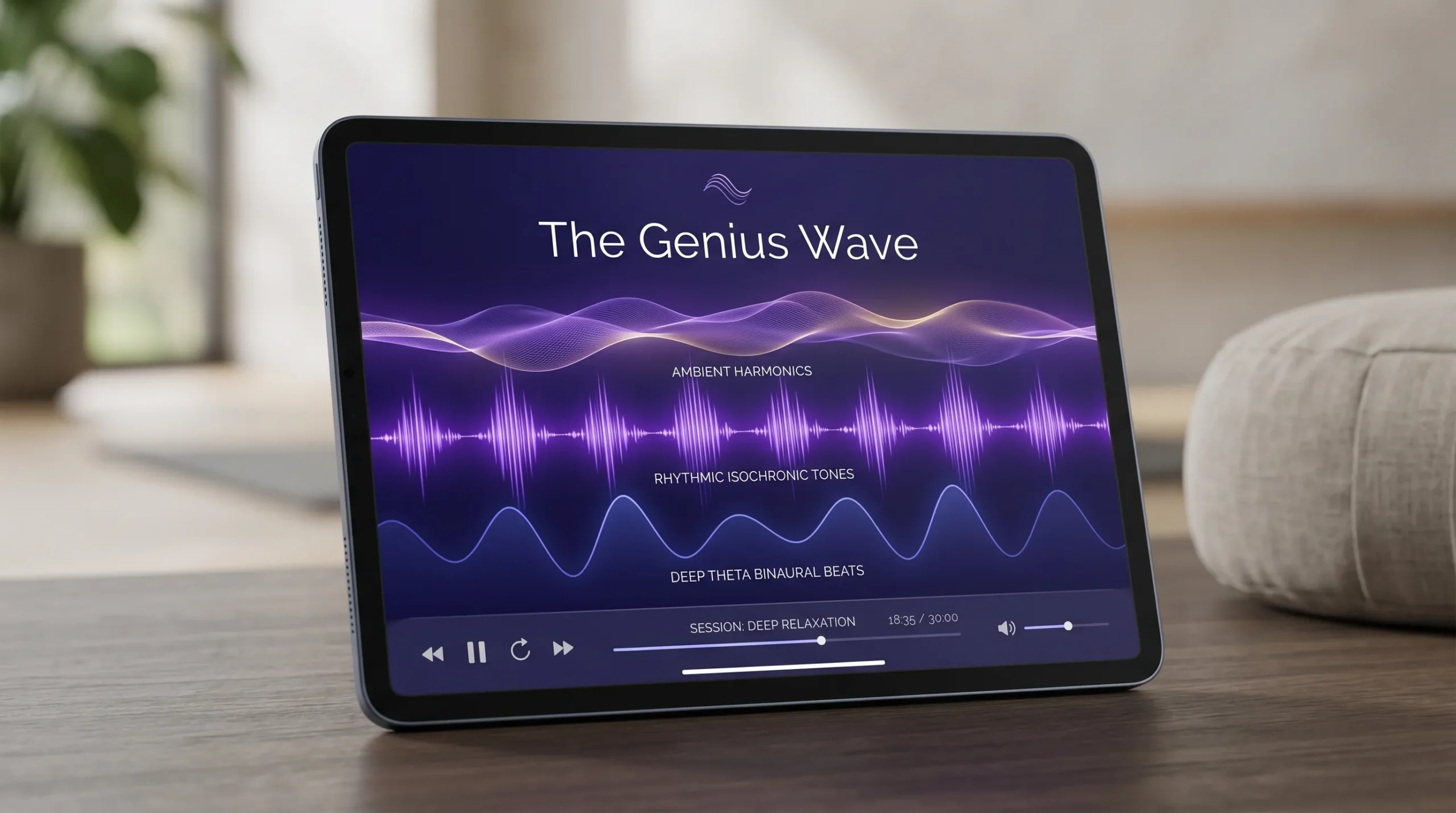
The Genius Wave is a cutting-edge audio program. It uses theta binaural beats and other layers to help you meditate deeply. It combines 4–8 Hz phase cues with rhythmic pulses and rich harmonics. This mix helps you relax and focus better.
Program overview and audio design
The Genius Wave combines binaural beats with isochronic tones and ambient harmonics. Binaural cues work through headphones to align brain waves. Isochronic pulses are strong and work well over speakers. The ambient layers help set a calm mood and smooth out transitions.
How layered audio supports entrainment
Layering creates more ways for your brain to follow the beats. Binaural beats help your brain waves align. Isochronic tones stimulate your brain's auditory responses. The ambient harmonics make it easier to relax and get into the practice.
Primary use cases
The program is great for deep meditation, creative work, and spiritual practices. It also helps with relaxation before sleep and supports intuition. Sessions aim to reach deeper theta states without being too loud or distracting.
Practical tips for regular use
- Start with 10–20 minute sessions in a comfortable position.
- Use headphones for binaural beats; try speakers for isochronic tones.
- Choose a time that fits your goal, like morning for creativity or evening for relaxation.
- Start with a moderate volume and avoid driving. Gradually increase session time as you get used to it.
- Keep a log of how you feel and adjust session length or timing as needed.
Final Verdict
Binaural Beats Work — And The Genius Wave Makes Them Work Better
The science of binaural beats is real, the benefits are measurable, and the technology is now accessible to anyone. The Genius Wave combines the best of binaural beats, isochronic tones and ambient harmonics into the most complete 7-minute theta entrainment protocol available today.
Conclusion
Binaural beats for meditation are an interesting tool that affects the brain. Studies show they can change brain waves, helping with relaxation and focus. But, results can differ because of how studies are done and who is in them.
People might feel less stressed, sleep better, and feel happier when using these tracks. Sessions in the theta range are great for deep relaxation and getting creative ideas. Yet, not everyone will see the same effects, and it's best to use them as a supplement to regular meditation.
In the U.S. and worldwide, binaural beats can be a helpful addition to meditation. Make sure to use headphones for the best effect. Programs like The Genius Wave mix different sounds to enhance the experience. But, it's important to remember that everyone's experience is unique, and more research is needed.
FAQ
What are binaural beats and how do they work?
Binaural beats happen when you hear two slightly different tones in each ear. Your brain makes a third tone, the binaural beat, which is the difference between the two. This beat is made by how your brain processes sound.
Headphones are needed to hear binaural beats clearly. The best beats are near 400 Hz, and the difference between them should be 1–30 Hz. This makes the beat clear, not just two separate sounds.
What is the frequency-following response (FFR) and how is it measured?
The frequency-following response (FFR) is when your brain follows the rhythm of sounds. In binaural beats, FFRs and ASSRs are measured with EEG or MEG. This shows how your brain reacts to the beats.
These responses prove that your brain is responding to the beats. But, not all studies find these changes. This is because different methods and analysis can affect the results.
Does brainwave entrainment by binaural beats really occur?
Brainwave entrainment is when external sounds make your brain waves match their rhythm. Some studies show that binaural beats can do this. But, the results are not always the same.
Studies have found both yes and no answers. This is because of different ways to test and analyze the brain's response. Some people feel the effects of entrainment, while others don't.
Why use binaural beats for meditation and relaxation?
Binaural beats can help you focus and relax deeper. Theta-range beats, between 4–8 Hz, are especially good for this. They help you get into a calm state faster.
People often feel more relaxed and focused after listening. But, everyone is different. Binaural beats are best used as a tool to help with meditation, not as a replacement.
Which EEG bands correspond to different mental states?
Different EEG bands are linked to different mental states. Delta (1–4 Hz) is for deep sleep and meditation. Theta (4–8 Hz) is for creativity and intuition.
Alpha (8–14 Hz) is for calm focus. Beta (14–30 Hz) is for active thinking. Gamma (30+ Hz) is for intense focus. These bands help guide the choice of binaural beats for different goals.
Why focus on theta binaural beats for meditation?
Theta beats, between 4–8 Hz, are great for deep meditation and creativity. Many studies show that listening to theta beats can change brain activity. People often report feeling very relaxed and creative.
But, not all studies agree. Theta beats are recommended for deep meditation and creative work. Listen for 10–30 minutes with headphones in a quiet place.
How do binaural beats compare to isochronic tones and monaural beats?
Isochronic tones are clear pulses of sound that can make your brain waves follow. They work well over speakers and don't need headphones. Monaural beats are made by sound interference in one ear.
Binaural beats need headphones to work. Isochronic tones are often better at making your brain waves follow. Mixing different types of beats can make the experience even better.
Do listeners need headphones, or can they use speakers?
For true binaural beats, headphones are best. They help keep the sound separate for each ear. Speakers mix the sounds and might not work as well.
If you can't use headphones, isochronic tones are a good choice. They work well over speakers because of their clear pulses.
How long and how often should someone listen to binaural beats to notice effects?
Many people feel the effects of binaural beats right away. A 5–20 minute session can be enough. Meditation sessions usually last 10–30 minutes.
Start with 10–20 minutes a day. Some studies used shorter or longer times. Listening regularly can make the effects stronger.
What practical guidelines improve the experience and safety?
Use good stereo headphones and keep the volume right. Sit comfortably and try to relax. Start with a short warm-up.
After listening, take a few minutes to just sit quietly. Don't listen while driving or doing things that need your full attention. If you have health concerns, talk to a doctor first.
How can someone tell if entrainment is occurring?
You might feel more relaxed, have vivid images, or feel more creative. These are signs that entrainment is happening. But, you can't always measure it.
The best way is to pay attention to how you feel over time. Try different frequencies and times to see what works best for you.
Are there documented benefits and limitations of binaural beats?
Some studies say binaural beats can help with anxiety, sleep, and focus. But, not all studies agree. It's like everyone reacts differently.
More research is needed to understand how binaural beats work. It's safe to try, but be patient and open-minded.
Can binaural beats replace traditional meditation practice?
No, binaural beats should not replace meditation. They can help you relax and focus better. But, meditation builds skills that go beyond just listening to sounds.
Using binaural beats with meditation can be helpful. It's like having a tool to enhance your practice.
What is The Genius Wave program and how does it differ from simple binaural tracks?
The Genius Wave is a special program that uses theta beats and other sounds. It's designed to work better with your brain. It uses different ways to make your brain waves follow the sound.
This program aims to help more people relax and focus. It works well with headphones and, to some extent, speakers.
Who should avoid binaural beats or use them with caution?
If you have epilepsy, certain mental health issues, or are pregnant, talk to a doctor first. Also, avoid listening while doing things that need your full attention. If you feel bad, stop and ask for advice.
How should someone structure a session using binaural beats for meditation?
Start with a short warm-up, like breathing exercises. Then, listen to the binaural beats for 10–30 minutes. Finally, take a few minutes to just sit quietly.
Adjust the time based on how you feel. Short sessions can help you relax quickly, while longer ones can help you explore deeper.
What should listeners expect scientifically and practically when trying binaural beats?
Binaural beats are an interesting phenomenon that can change brain activity. They might help you relax or focus better. But, everyone is different, and results vary.
Try them out and see how you feel. Be patient and open-minded. If you have health concerns, talk to a doctor first.
🎵 Complete Theta Brainwave & Meditation Research:
🧠
The Science:
Theta Waves Benefits — What Happens to Your Brain at 4–8 Hz
🎧
Sound Technology:
Binaural Beats for Meditation — The Science of Sound-Guided Brain States
⏱️
Daily Practice:
7 Minute Meditation — How a Short Daily Practice Transforms Your Brain
Leave a Reply